
Let's start with the honest part
Healing from difficult sexual experiences doesn't follow a schedule. There's no "six months and you're fine" or "a year and you'll be back to normal." Some people move through pleasure recovery in a matter of months. Others take years. Some move forward, then backward, then sideways for a while. All of that is completely normal, and all of that is okay.
What matters is that you're moving at your own pace, with tools that support gradual reconnection. A lemon clitoral vibrator can be one of those tools. Not because it magically heals anything, but because it gives you control. You choose the intensity. You choose the moment. You choose when to stop.
Why control matters more than anything else
Difficult sexual experiences often leave people feeling like their body isn't theirs anymore. Someone else made decisions about it. Someone else controlled what happened. Healing involves slowly, carefully reclaiming that sense of agency. That's not therapy speak. That's neurobiology. Your nervous system needs to learn that pleasure is something you initiate, not something that happens to you.
A lemon vibrator gives you that agency in concrete ways. You hold it. You decide the pattern. You stop whenever you want. There's no negotiation, no compromise, no wondering if someone else is enjoying it more than you are. It's yours, and the experience belongs entirely to you.
That distinction sounds small. In practice, it changes everything.
Starting slow doesn't mean you're doing it wrong
If you've spent months or years not touching yourself at all, even looking at a lemon vibrator can feel like too much. That's not a sign you're broken or healing too slowly. It's a sign your nervous system is being protective, which is actually wise.
Here's how I usually suggest starting:
Week one: Just look. Let the vibrator sit somewhere you can see it. No pressure to do anything. Your brain needs to adjust to the idea that this object exists in your space. Boring, I know. Necessary.
Week two: Hold it. Pick it up when you're fully clothed, sitting on the couch, doing something else. No expectation of using it. Just getting used to the weight, the feel, the fact that you can put it down whenever you want.
Week three: Explore texture. Run it over your arm, your leg, your hand. Anywhere that's not sexual. You're teaching your body that touch can be neutral and exploratory, not high-stakes.
Week four and beyond: See what feels okay. Only when all three of the above feel genuinely boring should you consider any kind of intimate use. And even then, start with the lemon vibrator off. Just see how it feels to have it near you. To hold it where you might use it.
This timeline might feel glacially slow. It's not. It's the pace your nervous system needs to feel safe.
Using a lemon vibrator when touch feels complicated
Once you've moved past the exploration phase, using the vibrator itself is straightforward. The tricky part is the emotional piece. Here's what I've seen work:
Start in a safe environment. That means alone, locked door, phone on silent, everything exactly how you want it. No "trying" while your partner's asleep in the next room or rushing because you think you "should" be done by a certain time.
Use the lowest setting first. The Lemon Clit Suckers' lemon vibrators have different patterns. Start with pattern one. Not because pattern three won't feel good, but because gentleness keeps your nervous system calm. Calm is the goal.
Pay attention to what your body says. If you feel resistant, stop. If you feel curious, keep going. If you feel triggered, stop immediately. Your body's feedback is not a failure. It's information. That distinction matters.
Give yourself permission to stop. Halfway through, five minutes in, whenever. The point isn't to reach a finish line. The point is to prove to yourself that pleasure is something you control. Stopping is part of that.
What happens when you hit an emotional wall
Maybe you're using the vibrator, and suddenly you feel something shift. Fear, sadness, numbness, anger. This is so common that it's practically universal in slow-recovery healing.
When that happens, stop. You're not failing. You're discovering something your nervous system needs you to know. The lemon vibrator isn't the problem. It's highlighting something that was already there.
Here's what's actually useful in that moment:
Turn off the vibrator. Stay with whatever you're feeling for a minute. Breathe normally. Name it out loud if you can: "This feels scary" or "I'm sad" or "My body doesn't feel like mine." You're not trying to fix it. You're just acknowledging it.
Then decide: Do you want to try again in a different way, or are you done for now? Both answers are fine. Most people find that stopping, taking a break, and trying again a few days later helps more than pushing through.
Building pleasure back takes time (and that's the point)
One of the biggest mistakes I see people make is treating pleasure recovery like a project to complete. They think: "By June, I'll be able to enjoy masturbation again." Then June arrives, and they're frustrated because they're not "there" yet.
Here's the reframe that actually works. Every single time you use a lemon vibrator and feel something close to pleasure, or curiosity, or safety. that's not a step toward recovery. That's recovery itself. You don't need to earn the right to enjoy your body. You're already there.
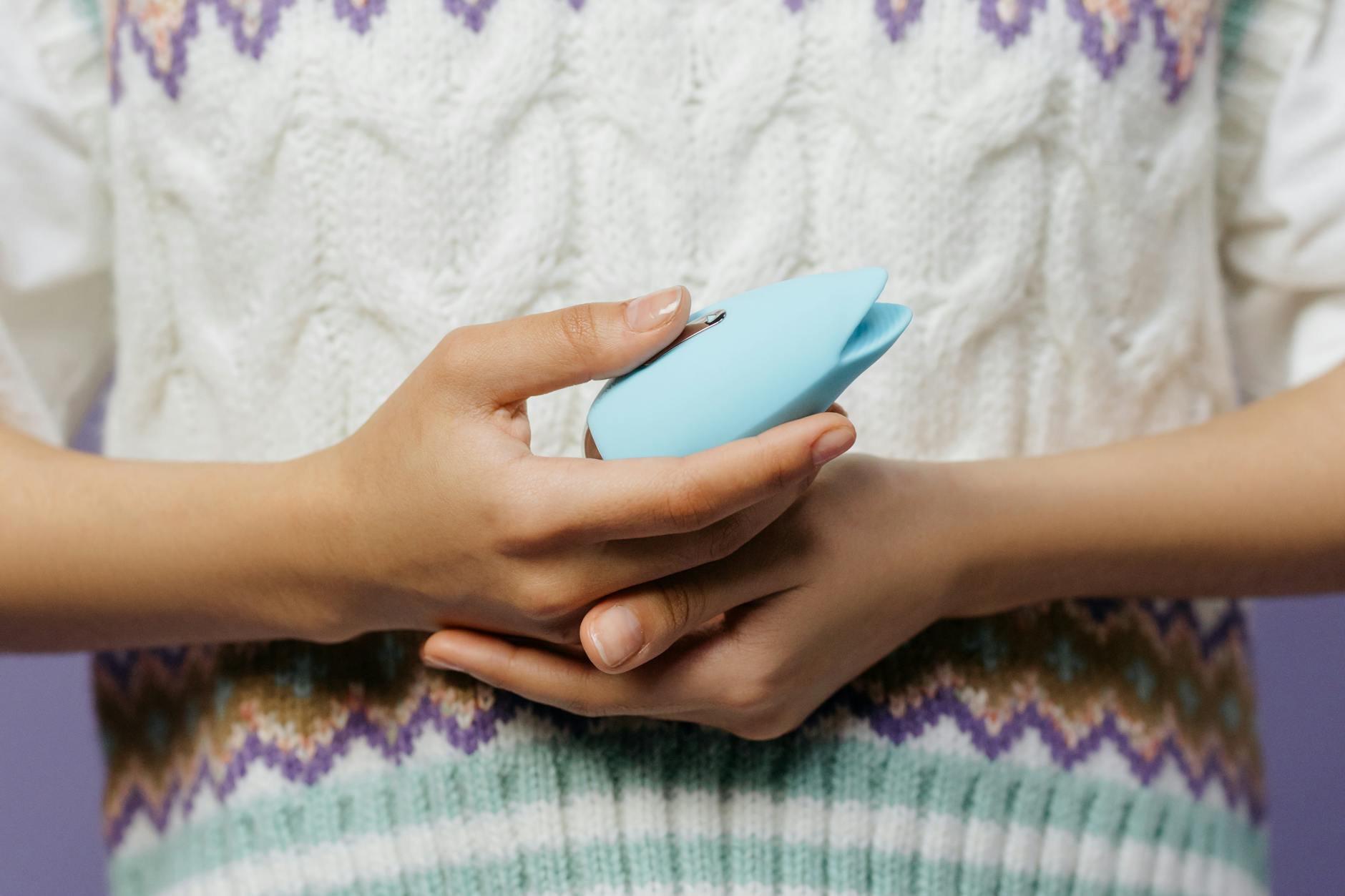
Photo by cottonbro studio on Pexels
Some sessions will feel amazing. Others will feel neutral or weird. Both are normal. You're not supposed to feel the same way every time. Your nervous system is learning that pleasure is safe again, and that learning happens in stops and starts, not in a straight line.
When to bring a partner in (or whether to at all)
If you're in a relationship, the question usually comes up: Do I tell them about using the vibrator? Do I use it during partnered sex? Do I keep it private?
There's no universal answer here, but there's a useful framework. Use the vibrator solo until you feel genuinely excited about it and genuinely safe. Then decide. If you want to involve your partner, use it as a separate conversation: "I'm using this for my own healing. This is about me reconnecting with my body. It's not about you or what we do together."
You can read more about how to use a lemon vibrator with a partner who is uncomfortable with toys if partnership concerns come up.
Most partners respect the honesty more than they care about the tool itself. And if they don't, that's information about whether the relationship is actually supporting your healing. That's a conversation for someone other than this article, but it's an important one.
The lemon vibrator as a confidence builder
After weeks or months of using the vibrator slowly and at your own pace, something subtle happens. You start to notice that you can feel pleasure. That your body can respond. That touch doesn't have to mean danger.
That's not magic. That's your nervous system gradually believing something new about safety and pleasure. A lemon clitoral vibrator supports that belief because it puts you entirely in control. When you're rebuilding pleasure after relationship trauma, agency is everything.
The vibrator itself is just the tool. The real work is the slow, patient decision to reclaim your body as yours.
Frequently asked questions
How long should I wait before using a lemon vibrator after a difficult sexual experience?
There's no "right" timeline. Some people feel ready after a few months. Others wait years. The useful marker isn't time elapsed. It's whether you feel curious about pleasure again, even a little bit. If you're still in the acute aftermath or actively in therapy processing the experience, wait until those feel more settled. A general guideline: if you can sit with the memory without your nervous system going into fight-or-flight mode, you're probably ready to explore slowly.
Can using a lemon vibrator re-traumatize me?
It's possible if you push yourself too fast or too hard. That's why the slow approach matters. If at any point using the vibrator feels like you're forcing yourself, or if it triggers memories or intense emotional reactions, stop. Healing is not about powering through. It's about moving at the pace your nervous system can handle. If you're finding that most attempts feel destabilizing, working with a trauma-informed therapist alongside using the vibrator is a smarter approach.
What if I don't feel anything when using a lemon vibrator?
That's incredibly common in early recovery stages. Numbness is a protective mechanism. Your nervous system learned that pleasure could be dangerous, so it shut that pathway down. Using a vibrator won't instantly fix that, but consistent, gentle exposure can help rebuild sensation over time. Some people find that other things help too. lowered stress, better sleep, processing the experience in therapy. The vibrator is one piece, not the whole solution.
Should I use a lemon vibrator alone or with a partner during recovery?
Alone first, always. You need to establish that pleasure is something you can control, that you can stop whenever you want, and that it's about you. Once that feels solid, you can decide whether involving a partner matters to you. Some people never do, and that's equally valid.
Is it normal to feel emotional while using a lemon vibrator during recovery?
Completely normal. You might feel sad, angry, relieved, scared, or nothing at all. Feelings can surface when your nervous system realizes pleasure is safe again. If you get emotional, you haven't done anything wrong. Stop, sit with it, and come back to it another time if you want to. The vibrator isn't causing the emotion. It's just bringing something that was already there to the surface.
How do I know if I'm making progress in pleasure recovery?
Progress looks different than you might think. It's not about reaching a specific type of orgasm or feeling a certain way. Progress is: feeling slightly less resistance to the idea of pleasure, noticing even tiny moments of curiosity, being able to use the vibrator without panic, staying present for a few minutes instead of dissociating. These small shifts are the real recovery. Trust them.
The bottom line
Healing from difficult sexual experiences is slow. That slowness isn't a bug. It's the point. Your nervous system has learned that pleasure can be dangerous. Teaching it something different takes time, patience, and tools that put you in control. A lemon vibrator can be one of those tools. Not because it fixes anything by itself, but because it lets you practice pleasure on your own terms, at your own pace, with the ability to stop whenever you want.
That's not just healing. That's reclamation.
If you're working through this kind of recovery and feel stuck, reach out. We're here to talk through what support might look like next.