
Let's name what's actually happening here
One of you gets there in five minutes. The other needs twenty. Neither pace is wrong. Both are completely normal. And yet, this mismatch lands in the middle of your bed like an uninvited guest, creating tension that has nothing to do with desire and everything to do with timing.
The tricky part? Arousal speed isn't a willingness problem. It's a nervous system problem. Your body's response time is determined by baseline cortisol, the amount of mental load you're carrying that day, how relaxed your pelvic floor is, and about a dozen other things your partner's words or actions can't rush.
Why speed mismatches feel like rejection (but aren't)
When your partner reaches climax way before you do, it's easy to interpret that as "they don't care about my pleasure" or "I'm taking too long." From their side, the frustration can sound like impatience or pressure. What's actually happening is both of you are bumping against different nervous system realities.
Men's arousal tends to build faster, partly because of testicular pressure and partly because, historically, we've created way less mental friction around male pleasure. Women and non-binary folks often carry more cognitive load into sex: Am I taking too long? Does my partner want this to be over? Should I fake it? That mental chatter alone slows down physical response.
Add in the fact that you might be anxious about your pace, and now you're actively fighting your own arousal. Your partner finishes, you haven't, and everyone feels bad. This is the story I hear in my office about three times a week.
What a lemon clitoral vibrator actually solves here
A lemon vibrator is not a magic fix for arousal speed. What it is: a tool that lets you own your timeline without performance pressure.
Here's the mechanics: suction-style stimulation like the Lem gets you to arousal and orgasm faster than manual touch or friction alone, without being dependent on your partner's rhythm. That speed boost isn't about rushing yourself. It's about giving your nervous system the right input to activate your natural response.
But the real win is psychological. Once your partner knows you have a reliable way to reach climax on your schedule, the pressure evaporates. They're not watching the clock. You're not performing. You're both just present.
The three-step setup that actually works
First, kill the performance narrative before sex even starts. Tell your partner: "My body takes longer to warm up. That's not about you. I want to use the Lem because it helps me feel good on my timeline, and then we can continue however we both want."
That sentence does three things. It removes blame. It frames the lemon vibrator as a pleasure tool, not a workaround. And it signals that you're not done when the Lem gets you off. Which is the part that usually shifts the dynamic.
Second, start using the Lem solo before bringing it into partner sex. You need to know what intensity and pattern work for you without an audience. Spend a week or two exploring. Most people find the lower patterns (1-3) are the sweet spot for regular use, and build up from there. This isn't about speed. It's about knowing your own body before you're trying to sync with someone else's.
Third, integrate it into foreplay without making it weird. Many couples assume a vibrator is a replacement. It's not. Use the Lem while your partner touches you elsewhere. Let them hold it for you. Switch roles. Some of the most connected sex I've seen involves one partner using a lemon vibrator while the other is touching, kissing, or inside them. That integration is where the magic happens.
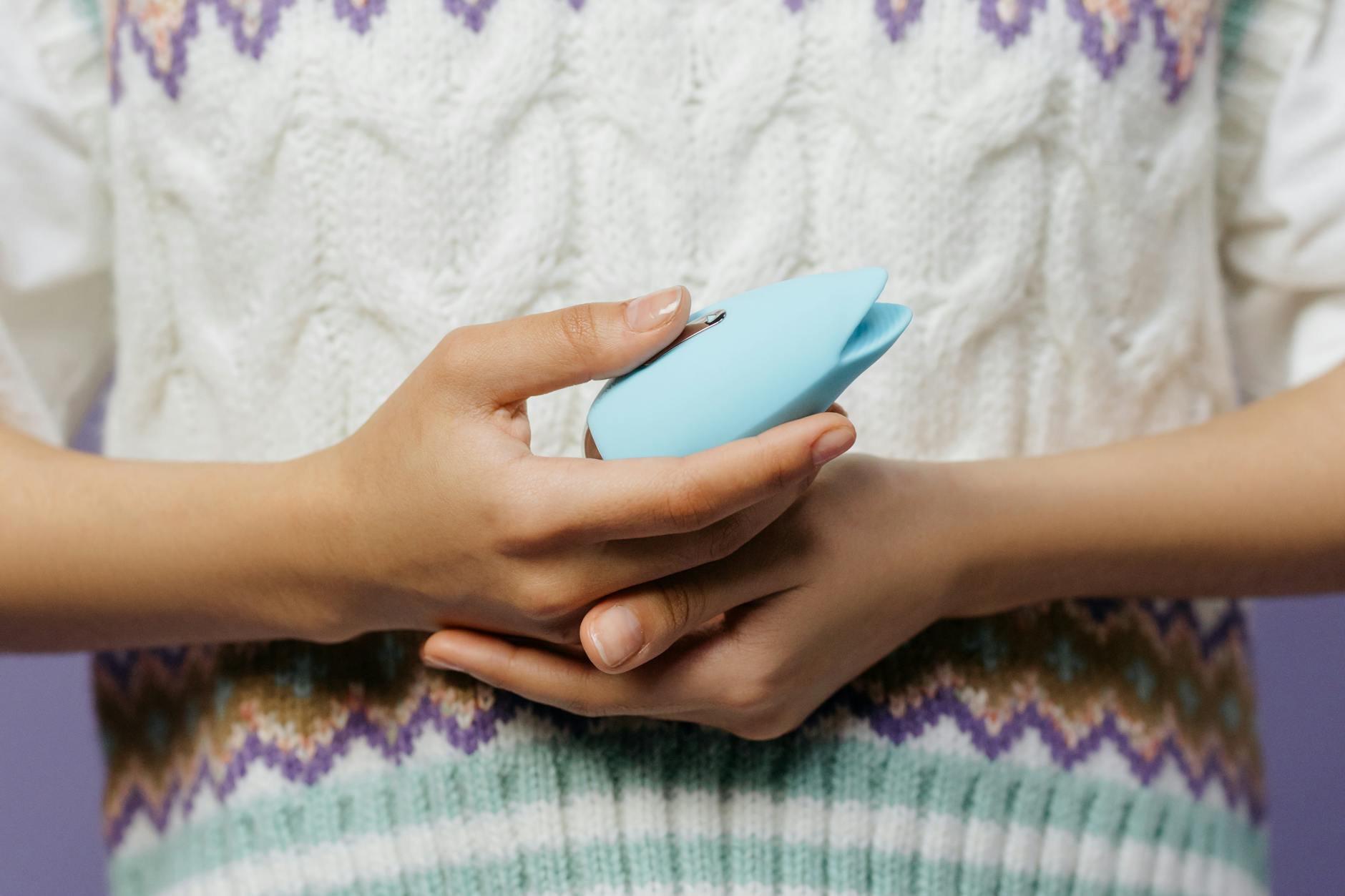
Photo by cottonbro studio on Pexels
Timing strategies for mismatched partners
Strategy one: Use the Lem during foreplay while they're still building arousal. You'll likely reach climax first. Then you're relaxed, present, and genuinely available for whatever comes next. This flips the usual timeline. You're no longer the person waiting.
Strategy two: Have them reach climax first, then you use the Lem. This sounds counterintuitive, but many people find it works beautifully. Your partner gets what they need without watching your pace. You get to use the vibrator when you're fully relaxed and there's zero pressure. Then you can continue with penetration, oral, or just lying there feeling good together.
Strategy three: Use the Lem simultaneously with penetrative sex. The clitoral stimulation can help you reach climax faster while your partner is inside you. This is where the Lem shines for bridging arousal gaps. You get the direct clitoral input you need. Your partner gets the sensation of penetration. You're actually on the same timeline for once.
Which one works depends entirely on your body, your partner's body, and what kind of sex you actually want to be having. The point is, you now have options instead of just hoping your arousal magically speeds up.
The communication piece that changes everything
Here's what most couples get wrong: they avoid talking about this until someone gets frustrated, and then the conversation becomes reactive and defensive.
Instead, talk about it when you're not having sex. Not in a clinical way, not in a therapy-speak way. Just: "I notice we get there on different timelines. I want to use the lemon vibrator not because anything's wrong, but because it feels good and takes the pressure off both of us. You in?"
If your partner is concerned the vibrator means they're not enough, that's a different conversation. And it's important. Listen to that. Often what they're really saying is "I want to be the one who gets you off." That's a real feeling. The fix isn't to hide the vibrator. It's to let them use it on you. To involve them in your pleasure instead of making it separate.
The couples I work with who navigate arousal speed mismatches best are the ones who talk about sex logistics the same way they talk about whose turn it is to cook dinner. Not hot, not intense, just practical and honest. Once you've said it out loud a few times, the shame dissolves. You're just two people with different nervous systems trying to enjoy each other.
What happens when the Lem is part of your routine
After three or four weeks of using a lemon vibrator with your partner, most couples notice something shifts. The pressure lifts. Sex becomes less about proving something and more about feeling something.
Some people find their arousal actually speeds up naturally once they stop being anxious about it. Some find they're more interested in sex overall because there's no dread before it starts. And most find that they feel closer afterward because they stopped fighting each other's bodies and started working with them.
Your partner wanting faster climax and you needing more time is not a compatibility problem. It's a logistics problem. And logistics have solutions.
FAQ
Why does arousal take longer for some people?
Arousal speed depends on nervous system activation, mental state, hormone levels, pelvic floor tension, and how much cognitive load you're carrying into sex. Women and non-binary folks often have more mental chatter during sex, which naturally slows arousal. This isn't a flaw. It's just how attention works. The goal isn't to speed it up through force. It's to create the right conditions for your system to activate naturally.
Can a lemon vibrator actually help my partner feel less frustrated?
Yes, but only if it reframes the entire dynamic. If you use the Lem defensively (like you're trying to shut down their feelings), it'll create more tension. If you use it as a tool you both get to enjoy, it actually relieves pressure. Many partners find they're way more present and satisfied when they stop waiting and start participating.
Is using a lemon vibrator during partner sex weird?
Not anymore. Most people under forty are used to vibrators in partner sex. If your partner is uncomfortable, that's a conversation. But awkwardness usually disappears after the first time you use it together. The second time feels normal. By the fourth time, it's just part of your sex toolkit.
What if I feel guilty about taking longer?
Stop. Your body is not a performance for an audience. If guilt is showing up during sex, that's the thing to address, not your arousal speed. Many people find that using the lemon vibrator actually removes guilt because it makes the entire experience feel less like a test you're failing and more like pleasure you're both choosing.
Can I use a lemon clitoral vibrator if my partner is inside me?
Absolutely. This is one of the most effective ways to bridge arousal gaps. Your partner gets sensation and penetration. You get direct clitoral stimulation. You're actually on the same timeline instead of one person waiting. The Lem's suction design is gentler than traditional vibrators for this, so there's less pelvic floor tension.
What if my partner thinks the vibrator means they're not enough?
That's insecurity talking, not reality. The fix is involvement, not hiding. Let them hold the vibrator. Use it together. Explain that the lemon sucker amplifies what's already happening between you, not replaces it. When partners participate in vibrator use instead of watching from the sidelines, that insecurity usually dissolves pretty quickly.
Your pace matters
Arousal speed mismatch feels like a bedroom problem. It's usually a communication problem pretending to be a bedroom problem. Once you name it, own it, and bring in a tool that works for your body, the actual intimacy gets easier.
The Lem exists because your timeline deserves respect. So does your partner's. When you stop fighting your nervous system and start working with it, everyone gets there feeling connected instead of rushed.