Let's talk about the orgasm clock that shouldn't exist
Here's the thing nobody tells you: the pressure to come quickly is just as real as the pressure to come at all. Whether it's your partner glancing at the clock, a nagging worry that you're taking "too long," or your own internal stopwatch that's been running since puberty, that ticking feeling flattens arousal flat.
I work with clients on this constantly. And what I've found is that the fastest way to slow down is to give yourself permission to never, ever race again.
Where the pressure to orgasm fast actually comes from
It's not just in your head, by the way. The pressure is structural. Movies compress a 20-minute scene into 90 seconds. Porn is edited for peak intensity. Your partner might finish in minutes and feel done. Social media celebrates quick, dramatic orgasms. Even your own nervous system is trained to think there's a "right speed."
But here's what the research actually shows: arousal speed varies wildly based on stress levels, hormones, medications, relationship dynamics, and what you had for lunch. There is no normal clock. Your clock is the only one that matters.
When you're carrying the weight of "I need to hurry," your nervous system stays in a low-level fight mode. Blood doesn't pool as effectively. Sensation feels muted. Pleasure requires full presence, and presence is impossible when you're performing against an invisible timer.
Why pressure kills sensation more than anything else
Your clitoris has about 8,000 nerve endings. Every single one of them is wired to your nervous system. When you're tense, your vagal tone stays elevated. This means your body's vagus nerve (the main relaxation highway) isn't fully engaged.
Without that parasympathetic engagement, touch feels less intense. A vibrator that would feel amazing when you're relaxed feels like background noise when you're performing. The sensation is literally there, but your nervous system isn't receiving it clearly.
This is why so many people think they have low sensitivity. They don't. They're just living in a constant low-level stress response. And honestly? That's the easiest thing to change.
How The Lemon clitoral vibrator becomes your permission tool
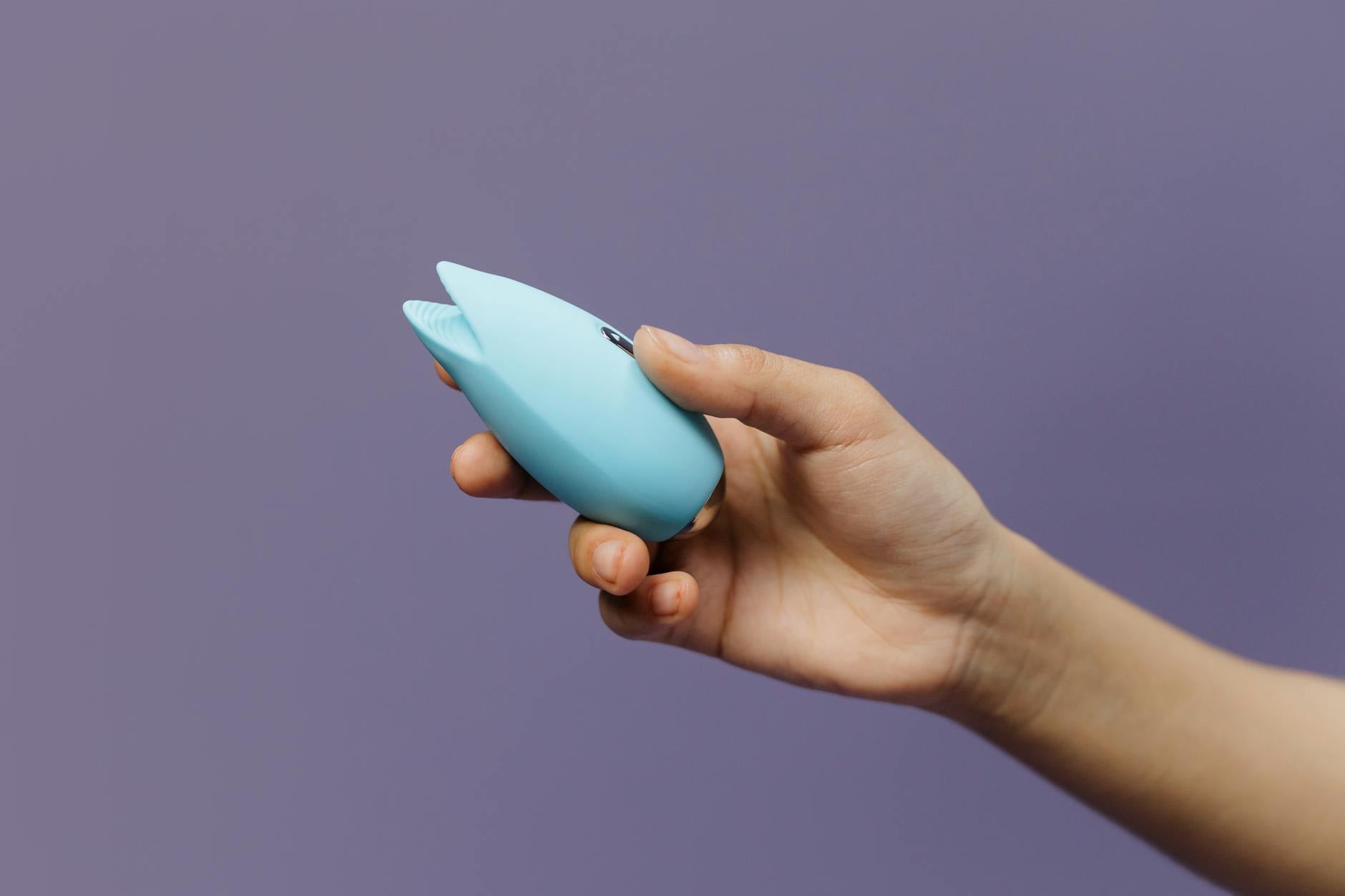
A lemon sucker like The Lemon works differently than a standard vibrator because the suction technology doesn't require constant friction. You can rest into it. Press gently. Let the sensation build. There's no "performing" required.
This matters because suction-based clitoral vibrators like the Lem create a different neurological experience than traditional vibration. The stimulation is broad, consistent, and repeatable. Once you find your rhythm, you can stay there as long as you need. There's no trying harder.
Start with pattern 1 or 2. Low intensity. No goal. Just sensation.
The pressure to finish disappears when there's nothing to finish toward.
Reframing arousal time as a feature, not a bug
I want you to think about this differently. If you take 20 minutes to build to arousal, that's not a problem to solve. That's actually a gift.
Here's why: a 20-minute warm-up window means you have time to check in with yourself. To notice where tension lives in your body. To breathe. To let your partner know what you need. To reset if something doesn't feel right. Fast arousal is efficiency. Slower arousal is information.
With a partner, this matters even more. If you're taking longer to warm up than they are, you're not broken. You're just different. Using a lemon vibrator during partner sex actually solves this misalignment because it puts you back in control of your own timeline.
You set the pace. You find the rhythm. They can stay close without rushing you, and you can stay engaged without disappearing into performance mode.
The practical setup that actually works
Four things I tell everyone who's carrying this pressure:
First: Set a no-finish-line rule. If you sit down to use your vibrator with zero expectation of orgasm, the pressure evaporates. Maybe you'll come. Maybe you won't. Either way, you win because you've experienced 15 minutes of pleasure with zero judgment attached.
Second: Use breath as your timer instead of a clock. Forget minutes. Breathe deeply for 10 full breath cycles. Then check in. How does your body feel? Is sensation building? If yes, keep going. If not, adjust pressure, pattern, or position. Breath keeps you present instead of watching the countdown.
Third: Build a three-minute ritual before you start. Dim the lights. Put your phone in another room. Lie down. Feel your body against the bed. This signals to your nervous system that this is safety time, not performance time. When your body believes it's safe, arousal comes naturally.
Fourth: If you're using this with a partner, communicate the new rule out loud. Say it: "I'm going to use my lemon vibrator. There's no finish line. I'm just enjoying sensation." This removes the expectation they might otherwise carry. They can be present without trying to rush you to some imaginary end.
What happens when the pressure actually lifts
The first time someone in this position orgasms without the stopwatch running, it's usually a shock. It feels different. Deeper, sometimes. More full-body. Less like a release and more like an experience.
That's because your whole nervous system was available for it. Not just your genitals.
And here's what almost always happens after that: the pressure stops coming back as intensely. Not because you've "fixed" anything, but because your body now has proof that pleasure exists without the rush. You've rewired the expectation.
Some clients tell me that after a few weeks of this, they actually notice that when they stop watching the clock, orgasms come faster anyway. Which is kind of hilarious. Turns out relaxation is the fastest path to sensation.
When to check in with yourself more deeply
If the pressure never lifts even after you've removed the external urgency, that's worth exploring. Sometimes the internal pressure comes from deeper stuff. Fear that you're taking up too much space. Worry that you don't deserve extended pleasure. Old messages about what your body should do.
That's not a vibrator problem. That's a nervous system and story problem. And those are worth discussing with a therapist who specializes in sexuality and shame. I'm not saying this to be pushy. I'm saying it because I've watched people spend months troubleshooting their technique when what actually needed to shift was their belief about whether they deserved unrushed pleasure in the first place.
They did. You do.
People also ask
Why do I orgasm faster when I'm not trying?
Your nervous system has two modes: sympathetic (stress response) and parasympathetic (relaxation response). When you're performing or watching the clock, you're sympathetic. Arousal blooms in parasympathetic. The second you stop trying, your body moves into the mode where pleasure is actually possible. Paradoxically, removing the goal speeds everything up.
Can a lemon vibrator actually help with this, or is it just a placebo?
Both. The suction technology in The Lemon works differently than traditional vibration because it doesn't require you to maintain pressure. This means you can relax more fully. But honestly, the bigger piece is psychological. Using a tool that's designed for slow, sensual exploration sends your brain a message that this is about presence, not performance. Over time, that message rewires the expectation. The tool plus the permission equals real change.
What if my partner is the one creating the pressure?
You need to have a conversation before you're in the moment. Say something like: "I notice I feel rushed sometimes, and it makes it harder for me to enjoy things. I want to slow down. That means I might take longer, and that's actually going to feel better for both of us." If they're defensive or dismissive, that's information about the relationship, not your body. A partner who cares about your pleasure wants you to feel good, not rushed.
How long should I actually give myself?
As long as you need. There's no right number. Some days 10 minutes. Some days 30. If you're with a partner and you know you tend toward longer warm-up time, that's a conversation: "I usually need about 20 minutes. Let's start here." No shame. No apology. Just information.
Is it normal that I feel guiltier the longer it takes?
Completely normal and completely changeable. That guilt is learned. You learned it from culture, from partners, from your own internalized sense that you shouldn't take up that much space. The antidote is repetition. Every time you give yourself permission to take 20 minutes instead of rushing to 5, you're sending a new message to your nervous system. After a while, the guilt gets quieter.
Do I need a specific lemon clitoral vibrator, or will any toy work?
Any vibrator can work if your mindset is right. But honestly? Tools that make it easier to relax are worth it. The Lem's suction design means you don't have to think about technique or maintain pressure. That frees up mental space. But the biggest part is that you're giving yourself permission. The vibrator is just the permission tool.
Your timeline is the right one
Orgasm isn't a race. Neither is arousal. Neither is pleasure.
The most generous thing you can do for yourself and your partner is to refuse the pressure clock entirely. When you stop trying to be fast, something shifts. You're suddenly in your body instead of watching it perform. Sensation becomes real again.
That's where the good stuff lives. Not in speed. In presence.
If you're carrying this pressure and want support unpacking it, reach out. This is exactly the kind of thing that shifts with the right framework and a little bit of time.