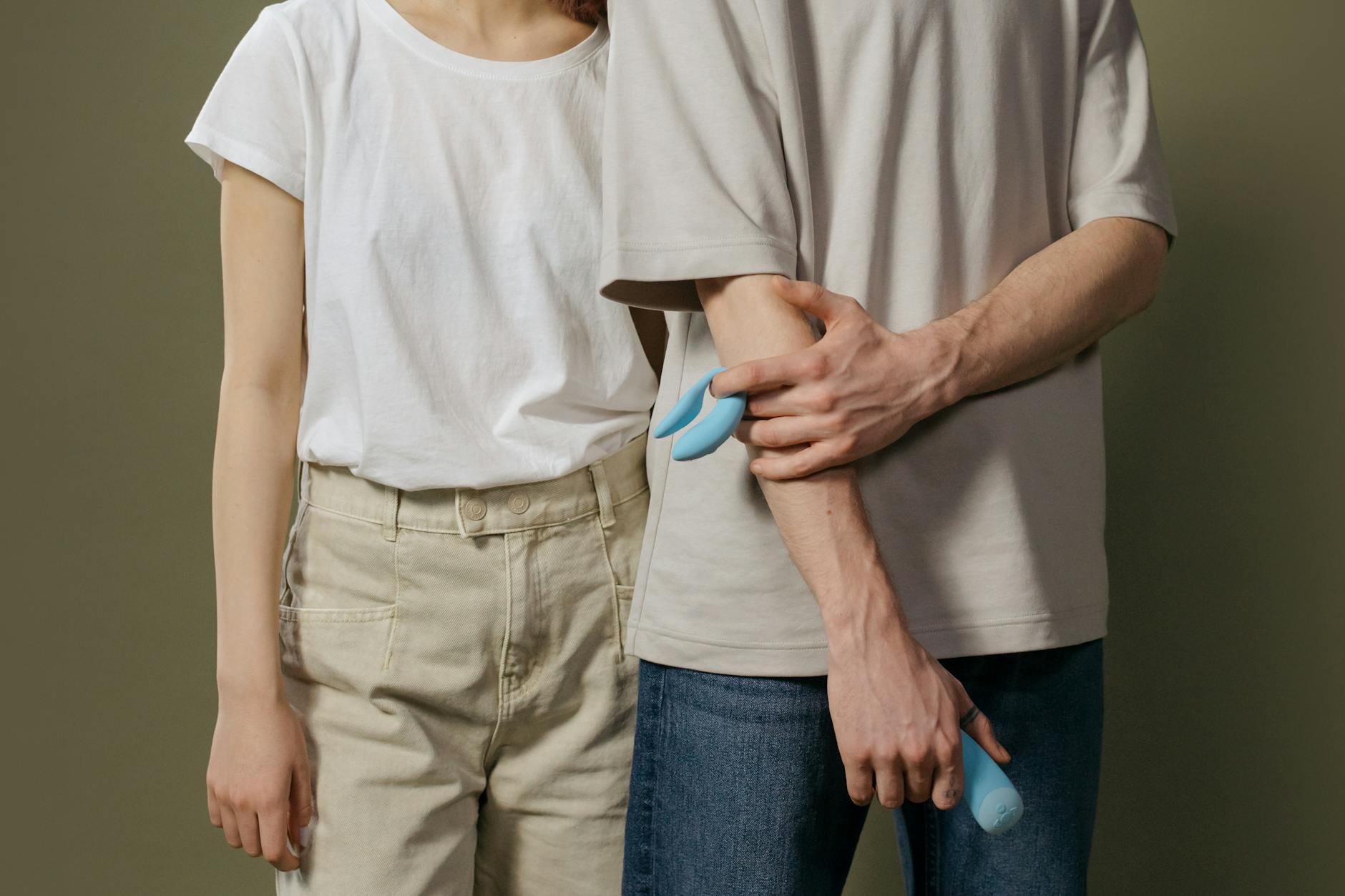
When you've been away from pleasure, anxiety shows up first
Let's be real. If you haven't prioritized your own pleasure in months, or years, picking up a lemon vibrator can feel weirdly loaded. Not because the device is intimidating, but because stepping back into sensation means confronting all the thoughts that have been living rent-free in your head. "Am I broken now?" "Will this even work?" "What if I can't finish?" "Is my body still capable?"
These aren't silly questions. They're your nervous system asking for permission to be afraid. And here's what I tell my clients in therapy: that fear is real data, but it's not a prediction. Your body hasn't forgotten how to feel. It's just been quiet for a while.
The physiology of pleasure-anxiety
When you've been away from sexual sensation for an extended period, your brain and nervous system don't instantly switch back on. There's a lag time that feels personal but is actually biological. Your clitoris has the same nerve density it always did. Your brain can still generate arousal. But the pathways between them get quieter when they're not being used.
Anxiety compounds this because it activates your sympathetic nervous system (fight-or-flight), which literally suppresses genital blood flow and arousal. You become hyperaware of your body's slowness to respond, which triggers more anxiety, which suppresses more response. It's a feedback loop that feels broken but is just temporarily stuck.
The good news: suction-based clitoral vibrators like the Lem work particularly well for this situation because they don't require the same buildup of natural lubrication or arousal that other toys do. They create stimulation independently of your current physiological state, which means you can bypass some of that initial anxiety by getting sensation flowing before the pressure of "performing" shows up.
Start with the lowest settings, not the highest
Most people's first instinct is to dial up the intensity thinking it'll make things happen faster. Don't. Your nervous system needs the invitation to calm down first.
When you pick up your lemon vibrator or other clitoral vibrator for the first time after a gap, start at pattern 1 or 2. Not patterns 5-8. I know this sounds counterintuitive, but you're not trying to achieve orgasm right now. You're trying to teach your nervous system that this is safe.
Spend 10-15 minutes at the lowest setting. This serves two purposes. First, it gives your body time to wake up the sensory pathways without overwhelming them. Second, it gives your brain time to shift out of "perform" mode and into "receive" mode. When the stimulation is gentle, you're not chasing an outcome. You're just feeling.
Many of my clients report that this gentle start leads to deeper sensation than they expected, not less. Because they're not fighting their own anxiety, the body can actually respond.
Create physical and emotional safety first
Before you even touch your lemon vibrator, engineer the environment for calm. That means: privacy, locked doors, a reasonable amount of time (not rushed), and ideally, some physical comfort. A blanket. Clothes off, or partially off, depending on what feels easier.
Emotional safety is less tangible but equally important. Set an intention that's not about outcome. Not "I'm going to have an orgasm" or "I need to prove I still work." Something like "I'm going to spend 20 minutes learning what feels good right now." Permission to not finish. Permission to feel awkward. Permission to stop if it doesn't feel right.
Many people who've been away from pleasure for a while carry shame about the gap itself. That shame becomes background noise during sex, and it mutes everything. Naming it and giving yourself explicit permission to move past it can shift the whole experience.
Water-based lubricant removes friction, literally and mentally
After time away, your body might not produce as much natural lubrication as it used to. This isn't a sign you're broken. It's just what happens. And when you notice that dryness, the narrative that plays is usually "see, I am broken." One way to short-circuit that spiral is to use water-based lubricant from the start.
Lubricant does two things here. Physically, it removes the friction that can feel uncomfortable on tissue that hasn't been touched in a while. Mentally, it signals to your nervous system: "I'm taking care of myself. I planned for this. I'm not expecting my body to perform under pressure."
Apply the lube directly to the opening and external area of your lemon clitoral vibrator, not just your vulva. This sounds obvious but most people skip it, thinking lubrication is "for later." Use it from the very first touch. You deserve the ease.
The timeline: expect 15-25 minutes, not 5
If you've been away from pleasure for a while, your arousal is going to need more time to build. This isn't a defect. It's just the reality of stepping back into sensation. Psychologically, if you're expecting 5 minutes and it takes 20, that feels like failure. If you expect 20 and it takes 15, that feels like success.
Budget time differently. Put your phone across the room. Tell your partner (if relevant) that you need uninterrupted time. Don't set a timer, but do give yourself permission to spend 25 minutes with zero outcome. When the pressure to perform drops, sensation often shows up faster than you expected.
Partner presence: navigate the awkwardness together
If you're in a relationship and you've both been away from pleasure, this can be even more loaded. You might feel like using a lemon vibrator signals that something's wrong with your partner, or that you're "choosing" the toy over them. That's rarely true, but the fear is real.
When you're ready to reintroduce a clitoral vibrator into partnered sex, the conversation matters more than the device. Not "I need this because you're not enough," but "My body needs time to wake back up. This helps me get there, and that benefits both of us." Many couples find that when one person's pleasure starts flowing again, the whole dynamic shifts.
You can also use the lemon vibrator solo first, without that witness. Getting comfortable with your own body's responses in private means you show up to partnered sex with less anxiety, which means better sensation for everyone.
When numbness is the problem, not arousal
Sometimes the issue isn't anxiety. It's that your clitoris feels numb or distant, like the nerves are sleeping. This can happen after long periods of inactivity, or with certain medications, or just with aging. A suction-based lemon vibrator actually addresses this better than traditional vibrators because the suction mechanism creates a different kind of stimulation. It's not just buzzing against tissue. It's creating gentle pressure and release.
If you notice numbness, resist the urge to crank the intensity to 10. Instead, focus on the sensation of suction at lower pressures. Pay attention to any micro-feelings. Warmth. Tingling. A sense of the clitoris "waking up." These aren't failures. They're signs that the nervous system is rebooting.
The orgasm question: reframe the whole thing
Here's what I tell people: if you're using a clitoral vibrator because you're anxious about whether you can still orgasm, you've already made orgasm the finish line. And if you're focused on the finish line, you're not paying attention to the route.
Let yourself have sessions where the goal is just sensation, not climax. Spend a week or two exploring what feels good at low intensities without any pressure to come. Orgasms often arrive when you stop chasing them and start savoring what's actually happening in your body right now.
Many of my clients report that their first orgasm after a long gap feels different. Sometimes less intense than they remember. Sometimes more. It doesn't matter. The point is, you're reconnecting with your own capacity for pleasure, and that's the whole win.
Moving from solo to partnered: the bridge
Once you've spent some time alone with your lemon vibrator and your own sensation is flowing again, introducing it to partnered sex becomes about communication, not shame. Your partner isn't being replaced. Your body is just getting the support it needs to show up fully.
You might explore using your clitoral vibrator during partnered sex, or solo before partnered sex, or alternating weeks of solo and partnered exploration. There's no script. The point is that your pleasure matters enough to engineer the conditions for it to return.
FAQ
Is it normal to feel anxious when reintroducing pleasure after a gap?
Completely. Your nervous system has spent months or years in a lower activation state. Stepping back into sensation means confronting both physical and emotional terrain. The anxiety is not a sign you're broken. It's your nervous system asking for permission and care as you rebuild this capacity. Almost everyone I work with experiences some version of this, and the ones who move through it most successfully are the ones who expect it and plan for it instead of treating it as a personal failure.
Why does a lemon vibrator work better when you're anxious than a traditional vibrator?
Traditional vibrators require a certain baseline of arousal and lubrication to feel good. If you're anxious, those things are suppressed, so a traditional vibrator can feel like too much stimulation too soon. A suction-based lemon clitoral vibrator creates stimulation independently of your current arousal state. It works at lower pressures and doesn't require the same conditions. You can have gentle sensation without waiting for your body to catch up.
How long does it take for sensation to return after a long gap?
It varies widely. Some people feel significant shifts within a week of solo exploration. Others take a few weeks. The timeline depends on how long the gap was, whether anxiety is present, what's happening in your relationship, and your overall stress level. Instead of waiting for a magic date when you're "back," focus on weekly incremental changes. After three weeks of regular solo time with your lemon vibrator, you'll notice shifts.
Can I use a lemon vibrator if I'm on medications that affect arousal?
Yes, but discuss it with your doctor first. Some medications (SSRIs, certain blood pressure meds) genuinely suppress genital sensation and lubrication. A clitoral vibrator can help bypass some of this, but it's not a workaround for a medication that's genuinely interfering with your life. If your arousal issues are medication-related and significant, your provider might adjust your dose or timing. Don't suffer quietly assuming it's permanent.
What if my partner is uncomfortable with me using a lemon vibrator?
This is about education and reassurance, not persuasion. Many partners worry that a toy means dissatisfaction with them. The truth is the opposite: you're invested in your own pleasure, which benefits both of you. If the discomfort persists, couples counseling can help you both understand what's underneath it. Often it's about feeling like they're being replaced, which is addressable through conversation and gradual reintroduction.
How do I know if numbness is normal or a sign of something medical?
Some numbness during anxiety or after a gap is normal and resolves with time and low-pressure stimulation. But if you're experiencing persistent numbness even at the clitoris's base, or if sensation is absent in other areas of your vulva, or if this is new and you're not in a period of reentry, mention it to your gynecologist. Occasionally, numbness signals something like nerve compression or medication effects that deserve professional attention.
Your body remembers pleasure, even after a long time away. It might take a few weeks of patient exploration, a little help from a lemon clitoral vibrator, and permission to move at your own pace. But the capacity is there. Start low. Stay curious. Give yourself time. The sensation you're worried you've lost is usually just resting, waiting for the right conditions to wake back up.