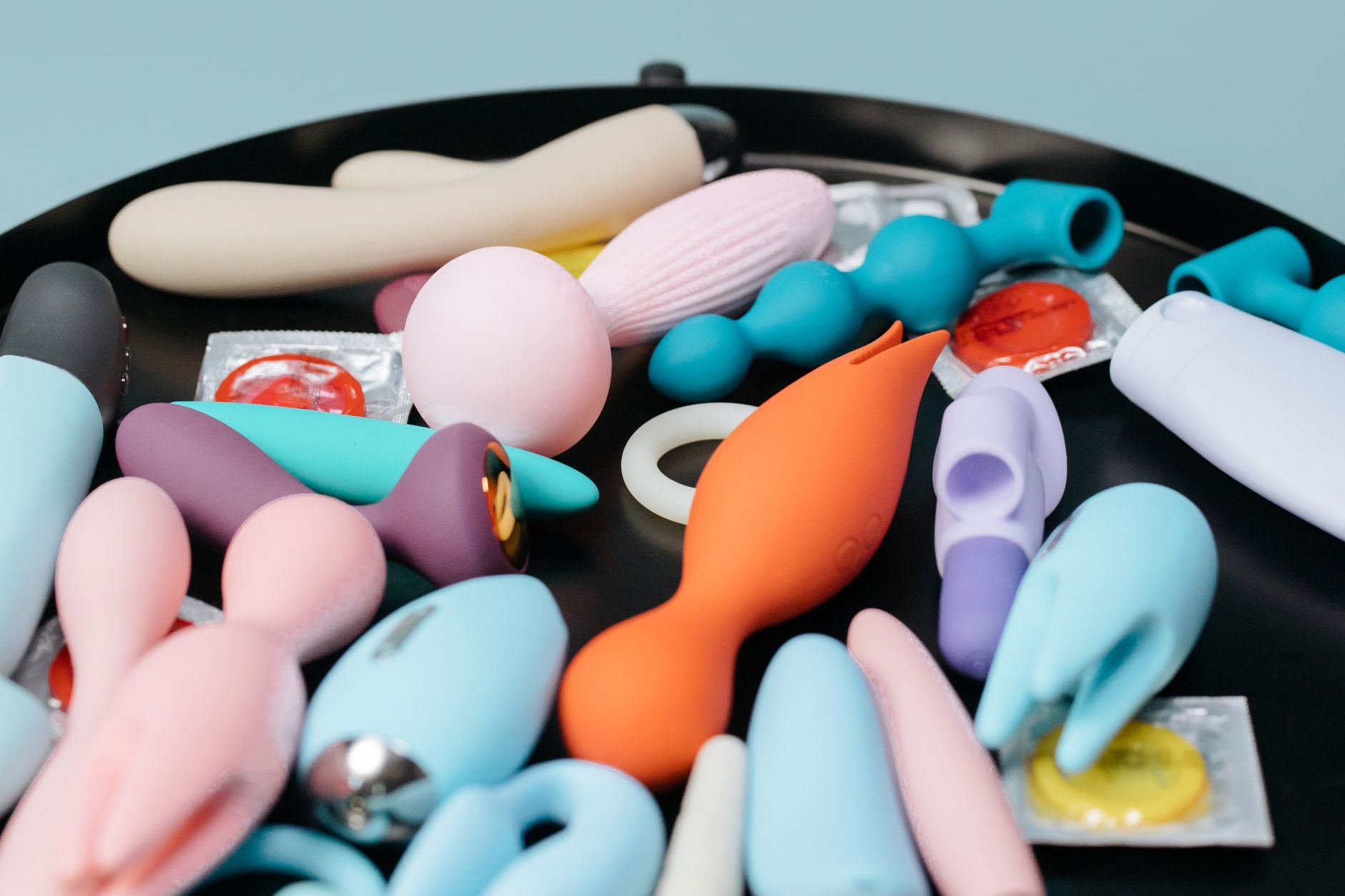
Let's talk about what happens when your clitoris is sensitive
Sensitivity during partner sex is not a problem to solve. It's signal. Your body is telling you something, and ignoring it turns what could be pleasurable into something uncomfortable. The trick is learning to translate that signal into better experiences.
Here's what I see in my practice: couples assume sensitivity means "less" everything. Less stimulation, less intensity, less pleasure. In reality, sensitivity often means you need a different kind of stimulation. That's where lemon vibrators change the game.
Why traditional vibration can feel too sharp on sensitive tissue
Bullet vibrators and wand vibrators work through rapid back-and-forth motion. When your clitoris is already tender or overstimulated, that friction can feel sharp, almost painful. You're stuck between "not enough" and "too much," which is honestly the worst place to be during partner sex.
The clitoral nerve has about 8,000 nerve endings concentrated in a space smaller than a pea. When tissue is sensitive, those nerves fire faster. Vibration hits them like a drum stick. What you need instead is something that stimulates without the mechanical percussion.
That's the entire concept behind suction. A lemon vibrator like the Lem uses gentle pressure and release rather than vibration to engage the clitoris. It's indirect. It's deeper. It doesn't feel like being tapped on a bruise.
How suction differs from vibration
When you use a lemon clitoral vibrator, the pattern changes everything about sensation. Instead of feeling stimulation on the clitoris, suction feels like gentle drawing, like the sensation is happening around and inside the tissue. Most people describe it as fuller, deeper, less sharp.
For sensitive clitorises, this matters because it spreads the sensation across a wider surface area. The Lem's opening creates a seal that involves the whole vulva, not just the visible part of the clitoris. That distribution means less intense pressure on the most sensitive nerve clusters.
The result? You can often use higher settings of a lemon vibrator than you could ever tolerate from a bullet vibrator at the same sensitivity level.
Setting up the conversation with your partner
Here's where couples get stuck: the person with the sensitive clitoris feels self-conscious, and the partner interprets sensitivity as rejection. Neither of those things is true, but the dynamic is real.
Before you even introduce a lemon vibrator, name what's actually happening. "My clitoris is sensitive when we touch it directly right now" is factual and not about them. "I want to try something that might help me feel pleasure without discomfort" is collaborative and forward-looking.
Most partners actually feel relief hearing this. Suddenly they're not navigating invisible boundaries. They have information. They can help.
How to introduce the Lem during partner play
Timing matters more than you might think. Sensitivity usually increases if you're already aroused. Counterintuitive, but true. The tissue swells, the nerve density becomes more concentrated, and direct touch becomes sharper.
Start with the lemon vibrator at a lower intensity (pattern 1 or 2) and build from there. This is not the time to jump to pattern 5. You're establishing what feels good, not proving you can handle intensity.
Have your partner watch the first time you use it together. Not in a clinical way. In a "I want to see what makes you feel good" way. That visual connection actually deepens pleasure for most couples. They learn your body's responses. You feel less alone in the sensation.
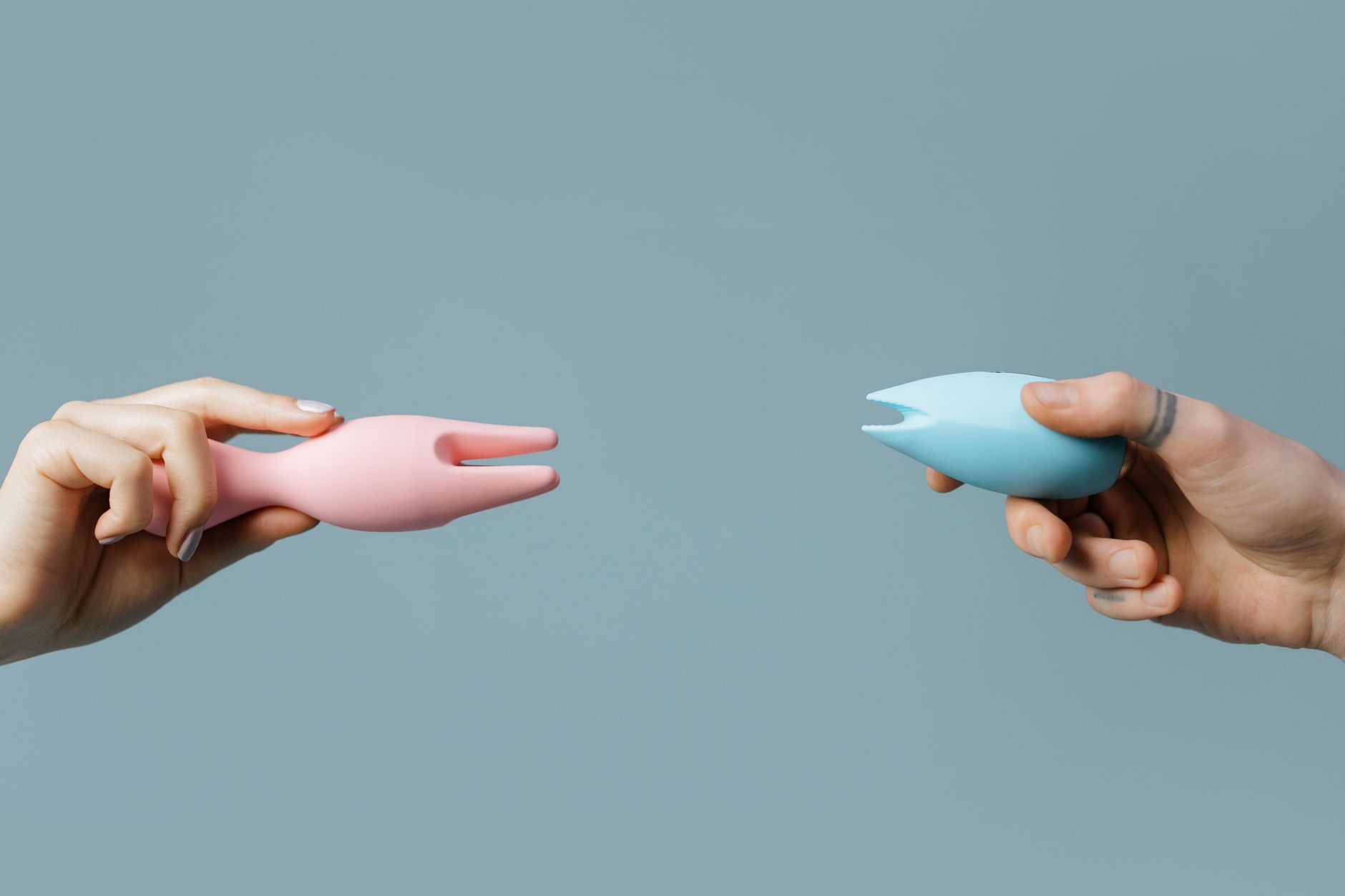
Photo by cottonbro studio on Pexels
When your partner can use it on you
Here's where suction becomes a couples tool. Once you've figured out what feels good on your own, your partner can hold the lemon vibrator. This requires a different kind of communication than direct touch, because they can't feel what you're feeling the same way.
Use your voice. "A little higher," "stay right there," "try the next pattern." Clear directions are not a mood kill. They're the opposite. They tell your partner they're getting it right.
The actual holding technique matters. The Lem is small enough that your partner can use it one-handed, which keeps their other hand free for touching you elsewhere. That's the whole point. You get clitoral stimulation that doesn't override everything else.
Many couples find that suction-based lemon vibrators feel less performative than bullets. There's less of a sense that you need to rush to orgasm before the intensity becomes uncomfortable. The experience becomes more about sensation building and connection.
Layering sensation when sensitivity is present
When your clitoris is sensitive, you often need more sensation elsewhere to balance it. This sounds backwards, but it works. While your partner is using the lemon vibrator on your clitoris, they can simultaneously:
Touch your inner thighs, your breasts, your neck. Use their mouth on your body in other places. Enter you with their fingers or penis while the vibrator stays on your clitoris. The broader stimulation actually makes the clitoral sensation feel less isolating and more integrated into whole-body pleasure.
This is called sensate focus in therapy terms, but really it's just common sense. A sensitive clitoris doesn't mean everything else should stop.
Signs the lemon vibrator is helping
You'll know this is working when a few things happen: you stop bracing against the sensation. Your breathing deepens. You can actually ask for what you want instead of hoping your partner guesses. Orgasms become possible without pain or numbness afterward.
If you're still experiencing sharp pain or feeling like the vibrator is making sensitivity worse, pause. You might need an even gentler pattern, or a different angle. The Lem works best when the opening sits directly over the clitoris, not off to the side.
Honestly though, sensitivity that's this severe usually warrants a check-in with a gynecologist. Sometimes sensitivity signals something like vulvodynia or hormonal shifts that benefit from professional input.
When to bring up lubricant
Lubricant and a lemon vibrator work really well together, especially if sensitivity is tied to dryness. Water-based lube doesn't interfere with suction the way some people worry it might. The seal still works. What changes is the ease of movement and the glide of the opening across your skin.
Your partner will notice they can position the vibrator more gently because there's less friction. The whole experience becomes smoother. For sensitive clitorises, this is usually a win.
Long-term patterns with partner use
One thing I've noticed in my practice: couples who solve clitoral sensitivity together often report feeling closer in other parts of their relationship too. This is because you've done something couples rarely do. You've identified a problem, gotten specific about it, and solved it together without shame.
That's actually the blueprint for everything else that comes up in long-term relationships.
People also ask
Can I use a lemon vibrator if my clitoris is always sensitive?
Yes, and it often helps more than other options. Always-sensitive clitorises respond really well to suction because it doesn't rely on direct mechanical friction. Start at the lowest pattern and let your body adjust. Many people find that using a lemon vibrator regularly actually reduces overall sensitivity over time, because the gentle stimulation helps desensitize the nerve endings in a gradual, positive way.
Will my partner feel the vibrator during penetration?
Sometimes, yes. If your partner is inside you and the lemon vibrator is on your clitoris, they'll feel some vibration. Most partners like this because it means your pleasure is heightened during a moment of connection. Some people use the vibrator in a way that keeps it external only. Experiment and see what works for your bodies.
Is it normal for my clitoris to feel more sensitive during certain times of my cycle?
Completely normal. Hormonal fluctuations change clitoral sensitivity throughout the month. Right before your period and during ovulation, many people report increased sensitivity. Around this time, lemon vibrators become even more helpful because you can use lower patterns and still get the same depth of sensation.
What if suction feels too intense instead of not intense enough?
Try a lower pattern first. If even pattern 1 feels too much, the Lem might not be the right tool right now. You could also try using it with less direct contact. Some people angle it so the opening is near but not directly covering the clitoris. This gives you the suction benefit with less intensity.
Can I use a lemon vibrator if I have a history of sexual pain?
Yes, but ideally with support. If you've had painful sex in the past, sensitivity is often protective. Your nervous system learned to brace against touch. Working with a sex therapist or pelvic floor physical therapist alongside using a lemon vibrator can help you slowly rebuild trust in your own body. The vibrator is a tool, but the real work is rewiring that protective response.
How do I talk to my partner if they think my sensitivity means I don't want them?
This is huge. Say exactly this: "My sensitivity isn't about you or how much I want you. It's about my body's current state. I want you with me while we figure this out." Then introduce the lemon vibrator not as a replacement for their touch, but as an addition to it. Show them it's something you do together.
The bottom line
Sensitivity during partner sex isn't a barrier to pleasure. It's actually information about what you need right now. A lemon clitoral vibrator gives you and your partner a tool that respects that sensitivity while deepening pleasure and connection. The key is communication before, during, and after. That conversation often matters more than the vibrator itself.
Ready to explore what works for your body? Start with the lowest pattern, check in with your partner, and give yourself permission to adjust as you go. Pleasure isn't about pushing through discomfort. It's about finding what actually feels good.
If sensitivity persists or becomes painful, reach out to our team or consult with a gynecologist who specializes in sexual health.