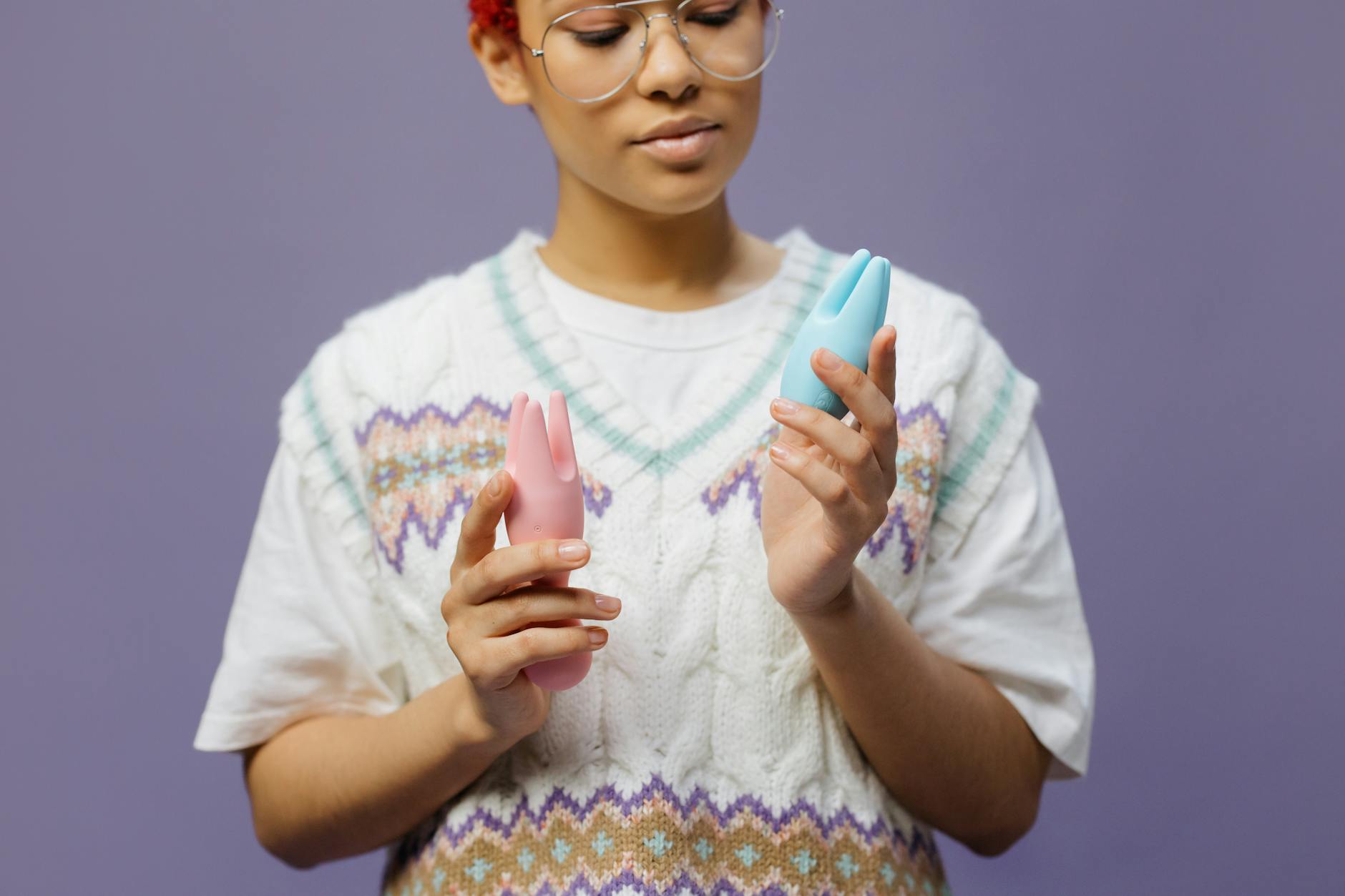
Let's name what's actually happening
Pain during sex. Vaginismus. The reflex that locks everything down. Trauma responses that spike when you try to relax. These aren't failures or signs your body is broken. They're signs your nervous system is doing its job a little too well. The good news: a lemon vibrator isn't about forcing anything. It's about inviting your body back into pleasure on its own terms.
Here's what I see in practice. People with painful sex or vaginismus try one of two approaches. Either they white-knuckle through penetration (which teaches their body that sex means suffering), or they avoid touch entirely because the anxiety of pain is worse than the pain itself. Both are logical. Both are also dead ends.
A clitoral vibrator, specifically something like the Lemon that centers external pleasure without any penetration demand, is a third door. It separates the conversation about pleasure from the conversation about penetration.
Why clitoral focus changes everything
When penetration is painful or triggering, your nervous system learns that vaginal stimulation means danger. Pelvic floor muscles tighten as a protective reflex. This isn't conscious. You can't just decide to relax. The protective reflex is faster than your will.
Clitoral pleasure, however, activates the exact opposite neural pathway. Stimulation of the clitoris signals safety and arousal to your nervous system. Blood flows to genital tissues. The pelvic floor gradually learns it's okay to relax. The suction action of a lemon vibrator is particularly helpful here because it doesn't require any internal pressure or compromise. You control the intensity. You control the pace. You control when it stops.
The research on this is clear. Women with vaginismus who start with external-only pleasure show faster recovery and more consistent confidence than those who jump straight to penetration work. Your nervous system needs to re-learn that touch equals safety before penetration can be anything other than a threat.
Building the foundation: solo practice first
If you're rebuilding trust in your body, the kindest first step is learning what pleasure feels like when there's zero expectation. Not foreplay. Not preparation for something else. Just: what does my clitoris like?
Start in a space where you feel genuinely safe. Not bedroom-adjacent. Genuinely safe. A room where you can lock the door, where the lighting is soft, where you have zero time pressure. Fifteen minutes minimum, no clock-watching.
Take time to notice your body without touching it yet. Run your hands over your arms. Your thighs. Your breasts. Let your nervous system register: this is me, and I'm choosing this, and nothing bad happens.
When you reach for your lemon vibrator, start at the lowest setting. Not because you're broken, but because low intensity lets you feel the difference between "this is nice" and "this triggers me." If you feel nothing, that's fine. If you feel a tiny flutter, that's the beginning. If you feel anxiety, stop. There's no failure here.
Many people with vaginismus find that the suction sensation of a lemon vibrator feels profoundly different from vibration. It's gentler. It's easier to control. It mimics the sensation of oral sex, which many find less threatening than penetration. Experiment with patterns. Stay at the intensity that feels like pleasure, not pressure.
What to do with a partner (and what to tell them)
This is where the conversation matters more than the vibrator.
Tell your partner: I'm rebuilding my relationship with pleasure. This isn't about you failing to turn me on. It's about my nervous system learning that touch is safe. The lemon vibrator is part of that learning. Your job is to slow down and let it work.
That looks like this. Partner stays with you, but not goal-oriented. You use the vibrator. They hold your hand. They breathe with you. They say things like "I'm right here" and "There's no rush." They do not try to transition to penetration. Not yet. Possibly not for weeks.
If you start to feel triggered while your partner is present, the only appropriate move is to pause. Not to push through. Pausing teaches your nervous system that you're in control and that you trust your partner to honor that control. This is the opposite of vaginismus recovery through power-over. It's recovery through collaboration.
Some people find that starting this work solo, alone, is essential before inviting a partner back. That's not a relationship problem. That's a smart boundary. Your nervous system heals faster when you're not managing your partner's emotions about your pain.
When to call in a professional
A clitoral vibrator is a useful tool. It is not a substitute for pelvic floor physical therapy if you have confirmed vaginismus or if pain is severe and persistent.
A pelvic floor PT can teach you what's actually happening in your muscles. They can give you internal techniques that are clinical, not sexual, which many people find less triggering. They can work alongside your vibrator practice, not against it. If there's scar tissue, trauma history, or if pain has been present for longer than six months, a PT assessment is important before self-directed pleasure work.
Similarly, if there's a trauma history, working with a trauma-informed therapist alongside the vibrator practice speeds up the nervous system reset. Vaginismus often has a psychological component, and a vibrator won't resolve that on its own. But it can create the space where psychological healing becomes possible.
Why patience is the actual foundation
Here's what I tell people in my practice: the fastest way to fail at this is to measure progress. You will not wake up one day "cured." Recovery is incremental. One week you can hold the vibrator to your vulva for two minutes without panic. Next week, three minutes. The week after, you can turn it on without freezing.
That's the whole thing. That's success.
If you've spent months or years with painful sex, your nervous system is operating from a survival mode. It doesn't trust that pleasure exists without consequence. Asking it to suddenly relax and enjoy stimulation is like asking someone who's been afraid of water to swim laps. The fear doesn't respond to logic. It responds to slow, repeated, safe exposure.
A lemon vibrator gives you a way to offer that exposure on your own timeline. That control is healing on its own.
FAQ: Rebuilding pleasure after pain
What if I feel nothing when I use a lemon vibrator?
Nothing is better than pain or anxiety. Your nervous system might need time to believe that this stimulation won't hurt. Sensation can take weeks to return after trauma or sustained pain. Keep going slowly. Sometimes adding a water-based lubricant helps you feel the suction action more clearly. Sometimes sensation returns faster when you're relaxed and warm. A hot bath before use, heating pads, warm sheets. Your nervous system releases faster when you're physically comfortable.
Can I use a lemon vibrator if I have a history of sexual trauma?
Yes, but with care. Trauma survivors often benefit from starting with their own hand first. No vibrator. No penetration. Just your hand on your inner thigh or mons pubis. Get used to touch that you're in complete control of. When you're ready to add a vibrator, many people prefer external-only options like a clitoral sucker because there's zero penetration pressure. Start at the lowest setting. Pause whenever you need to. Your only goal is to notice that your body can experience sensation without consequence. That's enough.
How long does it take for pain to go away if I use a lemon vibrator regularly?
There's no timeline. Some people see meaningful improvement in four to six weeks of consistent practice. Some take three to four months. The variability depends on the root cause. If it's vaginismus (muscle reflex), it often improves faster once you've done pelvic floor PT. If it's trauma-related, it usually improves alongside therapy. If it's a physical condition like endometriosis, a vibrator helps with pleasure but doesn't address the underlying condition. This is why a healthcare provider assessment matters.
Is it normal to feel aroused and terrified at the same time?
Completely normal. Arousal and fear activate different parts of your nervous system, but when your history is painful sex, both can spike together. Your body is remembering that arousal led to pain. This mixed response typically softens as you repeat the experience of arousal without pain. Each time you use your vibrator and feel good and nothing bad happens, that contradiction weakens.
Should my partner be involved from the start?
Not necessarily. Many people feel safer learning alone first. Pleasure with a witness, especially someone you have history with, adds a layer of performance anxiety that complicates nervous system healing. Solo practice first is not a sign the relationship is in trouble. It's a sign you're being strategic about your recovery. Bring a partner in once you feel genuinely confident in your own pleasure, not before.
What if I have vaginismus but my partner doesn't know?
Tell them. Here's the script: I've discovered I have vaginismus, which is a pelvic floor reflex that makes penetration painful or impossible. I'm working with a doctor and possibly a pelvic floor therapist. I'm using other ways to experience pleasure in the meantime. I'm telling you because I want partnership, not secrecy. If your partner responds with shame or impatience, that's information too. People worth staying with support your healing, even when it's slow or inconvenient.
The bigger picture
Vaginismus and pain during sex often arrive with shame. The sense that something is wrong with you. That you're broken or impossible or demanding for wanting sex to feel good instead of awful. None of that is true.
Your body is protecting you. It's doing exactly what it's designed to do. The work is showing your body that it's safe to relax that protection. A lemon vibrator is a tool for that conversation. Pelvic floor PT is a tool. Therapy is a tool. Patience with yourself is the largest tool.
Start where you are. Use what feels safe. Stop when you need to. Your pleasure isn't an obligation. Your healing isn't a performance. If you want support navigating this, we're here to help. Get in touch.