
Let's start with what doesn't change
When erectile dysfunction arrives in a relationship, the first thing couples tell me is: "We thought our sex life was over." It's not. What changes is the performance pressure, the binary thinking about what counts as real sex, and the shame that usually shows up uninvited. The pleasure itself? Still there. Often better, because you stop waiting for one thing to happen and start actually paying attention to each other.
Here's the thing about ED that most people don't talk about: it's not a personal failure. It's a signal that something physical or psychological needs attention. And in the meantime, your sex life doesn't have to pause.
Why erectile dysfunction doesn't mean the end of intimacy
Erectile dysfunction is incredibly common. At 40, roughly 40% of men experience it. At 50, it's 50%. These aren't failures. They're normal variations in how bodies respond to stress, age, medications, hormones, and relationship dynamics. The worst part isn't usually the ED itself. It's the spiral of shame that makes couples stop touching altogether.
The second thing I hear from partners is: "I feel like I'm not desirable anymore." That's the real wound. And it's completely separate from whether someone can get or maintain an erection. A lemon clitoral vibrator solves this by reframing what sex can be. Instead of "we need him to perform," the conversation becomes "we both deserve pleasure." That's not a concession. That's an upgrade.
How arousal gaps widen under performance pressure
Here's the pattern I see most often. Partner A loses an erection. Both partners freeze. The mood dies. Next time, Partner A is anxious before anything even starts, which makes it harder to get aroused. Partner B stops initiating because they don't want to "cause" the problem. Three months later, they're barely touching.
A lemon vibrator interrupts this cycle early. It removes the pressure for penetration to happen on a schedule. Instead, pleasure becomes collaborative and present-focused. Your partner doesn't have to "perform" for you. You're both just exploring what feels good.
The physical mechanics of using a lemon vibrator when ED is present
If your partner is experiencing erectile dysfunction, the lemon clitoral vibrator becomes central to partnered sex, not auxiliary. Here's how:
Start with foreplay that doesn't depend on erection. Spend 15-25 minutes on kissing, touching, exploring. Your partner can use their hands, mouth, or body while you use the lemon vibrator on yourself. This removes the pressure to "get there" on anyone's timeline.
Use the vibrator during manual stimulation. If your partner wants to be inside you but isn't reliably hard, the vibrator lets you stay present and aroused while they're touching you. Arousal is contagious. If you're clearly enjoying yourself, they relax. Relaxation often brings the erection back.
Try the vibrator during partnered penetration. If they do get hard and want to penetrate, the vibrator on your clitoris during sex often gives you an orgasm faster. This removes the pressure for them to last long enough for you to finish. Everyone wins.
Make it about pleasure, not problem-solving. Use the vibrator because it feels amazing, not because "we need this to work." The difference in tone is everything.
How to talk about it without making it worse
Most couples never actually discuss ED directly. They just avoid sex. The conversation usually needs to happen outside the bedroom, when you're both calm and clothed.
Start with this: "I love you and I want us to keep having good sex. That looks different than it used to, and I'm okay with that." Don't make it about reassuring them. Make it about your own desire. Then offer the practical shift: "I want to try using a vibrator together. Not because anything is wrong with you, but because I think we'd both enjoy it."
If your partner is resistant, the resistance usually isn't about the vibrator. It's about what the vibrator represents. To them, it might feel like evidence of failure. Reframe it: "This isn't a replacement for you. It's something we use together. You're still the person I want to be intimate with."
Many partners find that once they try it, the relief is immediate. The pressure lifts. Pleasure comes back. And sometimes, when you're both relaxed and focused on sensation instead of performance, erectile function improves on its own.
When to involve a doctor (and when not to panic)
If ED is new and sudden, it's worth a check-in with a GP. Rule out diabetes, cardiovascular issues, or medication side effects. Many times, the fix is as simple as a different blood pressure medication or addressing sleep.
If ED is persistent and your partner is interested, treatments exist. Viagra and Cialis work for many people. Therapy, either solo or couples work, helps when the problem is psychological. A sex therapist can be surprisingly useful here.
But here's what I tell couples: you don't have to wait for a perfect erection to have great sex. You can start using the lemon vibrator and enjoying each other today. The pressure relief alone sometimes fixes more than any medication.
The emotional shift that actually matters
The deepest change I see when couples start using a lemon vibrator together during ED isn't physical. It's that they stop performing and start connecting. Your partner gets to watch you enjoy yourself. You get to receive pleasure without guilt about whether they're "doing enough." Both of you relax into sensation.
That's where real intimacy happens. Not in flawless performance. In presence.
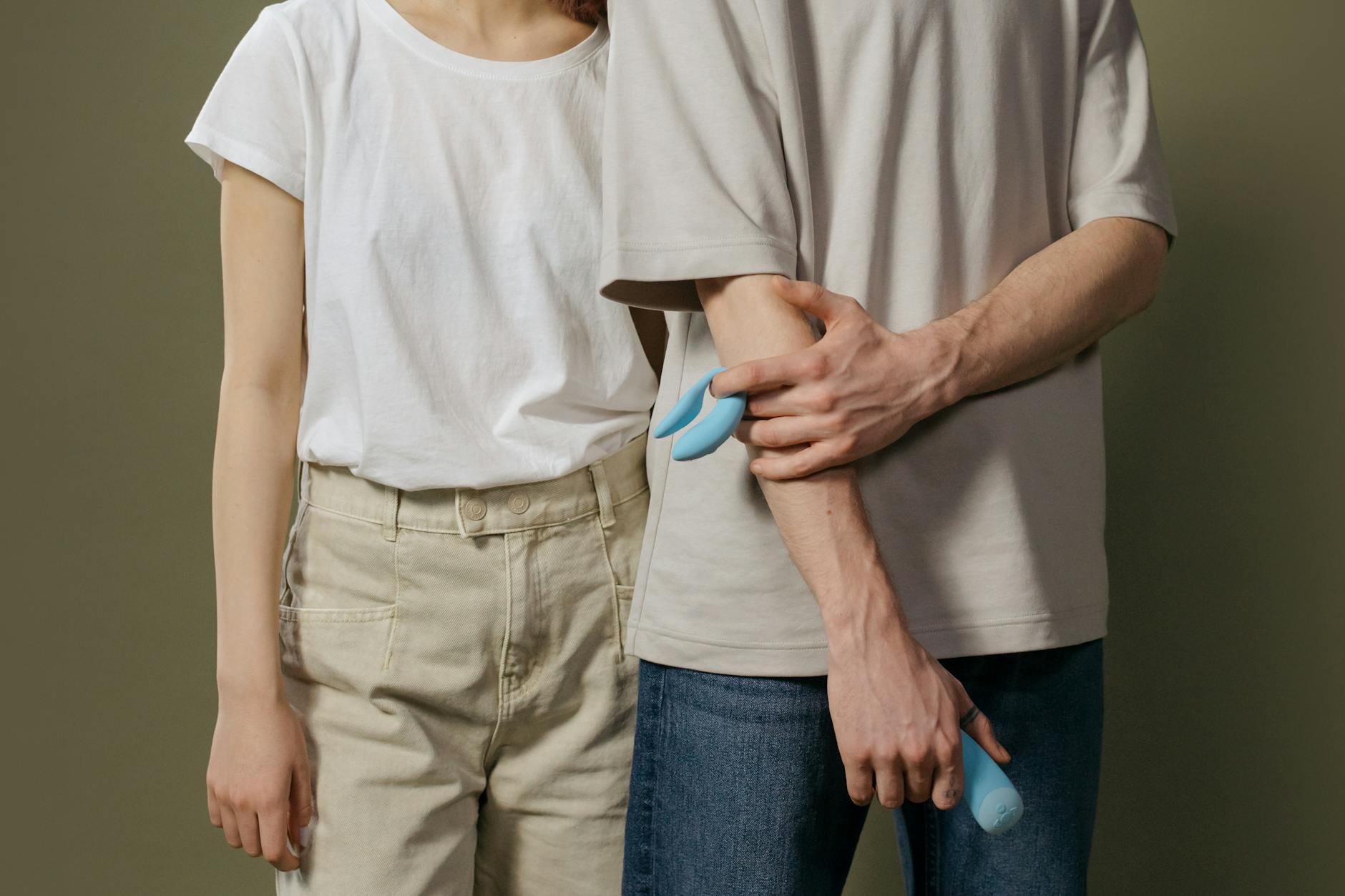
Photo by cottonbro studio on Pexels
Building a practice that works for both of you
Start small. Don't make the vibrator the only focus. Use it alongside everything else you already do. Let your partner hold it sometimes. Let them control the intensity while you focus on feeling. Some couples find that the person without a vulva enjoys the vibrator too, either on themselves or on their partner.
The point is: this is collaborative. You're both learning what works. That's the opposite of performance pressure. That's actual intimacy.
If you're looking for a clitoral vibrator that's designed for partnered use and sensitive tissues, many couples find air-suction devices like the Lem work particularly well. They're quiet, they don't require changing batteries constantly, and they create a completely different sensation than traditional vibration.
When ED affects your own confidence
One thing partners tell me: "I worry that the ED is my fault. Maybe I'm not attractive enough anymore." That's usually not true. But the fear is real. Using a lemon vibrator together is one way to rebuild confidence. You're both leaning in. You're both choosing this. It's proof that desire is still alive.
If those doubts run deep, a couples therapist can help. ED often surfaces bigger relationship questions: Are we still connected? Do we still want each other? Those are worth exploring, separate from the mechanical problem of the erection itself.
FAQ: Erectile dysfunction and vibrators
How do I bring up using a vibrator if my partner is already feeling insecure about ED?
Timing matters. Don't bring it up mid-intimacy or when you're discussing the ED itself. Choose a calm moment and frame it around your pleasure, not their problem. "I've been thinking about what makes me feel really good, and I want to explore that with you" is different than "We need this because you can't get hard." Same tool, completely different message.
Will using a vibrator make him feel more inadequate?
Not if you use it the right way. The difference is whether the vibrator is a substitute or a complement. If you're using it together, during partnered sex, it's collaborative. If you're using it alone as a workaround, he might feel replaced. The first scenario usually feels good to both people. The second usually doesn't.
What if he wants to use the vibrator on me himself?
That's actually really common and often works great. It takes the pressure off him to perform with his own body while keeping him involved and in control. Some partners find that holding the lemon vibrator while kissing you is the perfect combination. It keeps him engaged and present.
Can ED go away if we improve our sex life?
Sometimes, yes. If the ED is purely psychological and related to performance anxiety, reducing that pressure through vibrators, different positions, or expanded definitions of sex can help it resolve. If it's physiological, the ED usually stays the same, but your relationship to it changes completely.
Is it normal to lose interest in sex altogether when ED happens?
Completely normal. Both partners usually withdraw. The person experiencing ED feels shame. The partner feels rejected or worried they're causing the problem. That's the pattern that breaks when you introduce a vibrator. Suddenly, sex is accessible again, and so is desire.
How do I know if ED is a medical issue or a relationship issue?
Often, it's both. A GP can rule out physical causes. A therapist can help with psychological ones. But here's what I tell couples: you don't need to solve the cause before you start having good sex again. You can do both at the same time. Start using the vibrator, see a doctor, go to therapy. None of those cancel each other out.
The bottom line
Erectile dysfunction is common, treatable, and completely compatible with a vibrant sex life. A lemon vibrator isn't a workaround. It's a way to expand what's possible when you stop waiting for one specific thing to happen.
Your sex life doesn't have to end. It just gets to evolve. And often, that version is better.
If you're ready to explore this with your partner, start the conversation outside the bedroom. Keep it about connection, not about fixing the problem. Then introduce the vibrator as something you both want to experience together.
Your pleasure matters. Their pleasure matters. Both of those things can be true at the same time.
Want to explore how vibrators fit into your specific situation? We're here to help.