Clitoral sensitivity shifts over decades. This isn't failure. It's biology. The tissue thins slightly, nerve density doesn't change but the surrounding structural support shifts, and hormonal fluctuations affect how quickly nerves fire. None of this means sensation is gone. It means sensation changes.
The research is clear on this: most people who report reduced clitoral sensitivity in their 40s, 50s, and beyond aren't actually losing nerve endings. They're experiencing a change in response speed and intensity threshold. The clitoris still has over 8,000 nerve endings. What's different is the path those signals take to register as pleasure.
Here's the mechanical part. A traditional vibrator works through oscillation. It moves back and forth, creating friction against tissue. When you're 25, that friction registers immediately. Clitoral tissue is plump with estrogen, blood flow is fast, and the nerve response is equally fast.
As tissue composition changes over years, direct friction can feel either muted (like you're not feeling much) or, paradoxically, too intense (like it's almost uncomfortable). This is why many people in their 40s and beyond report that their favorite vibrator from their 30s suddenly feels "wrong."
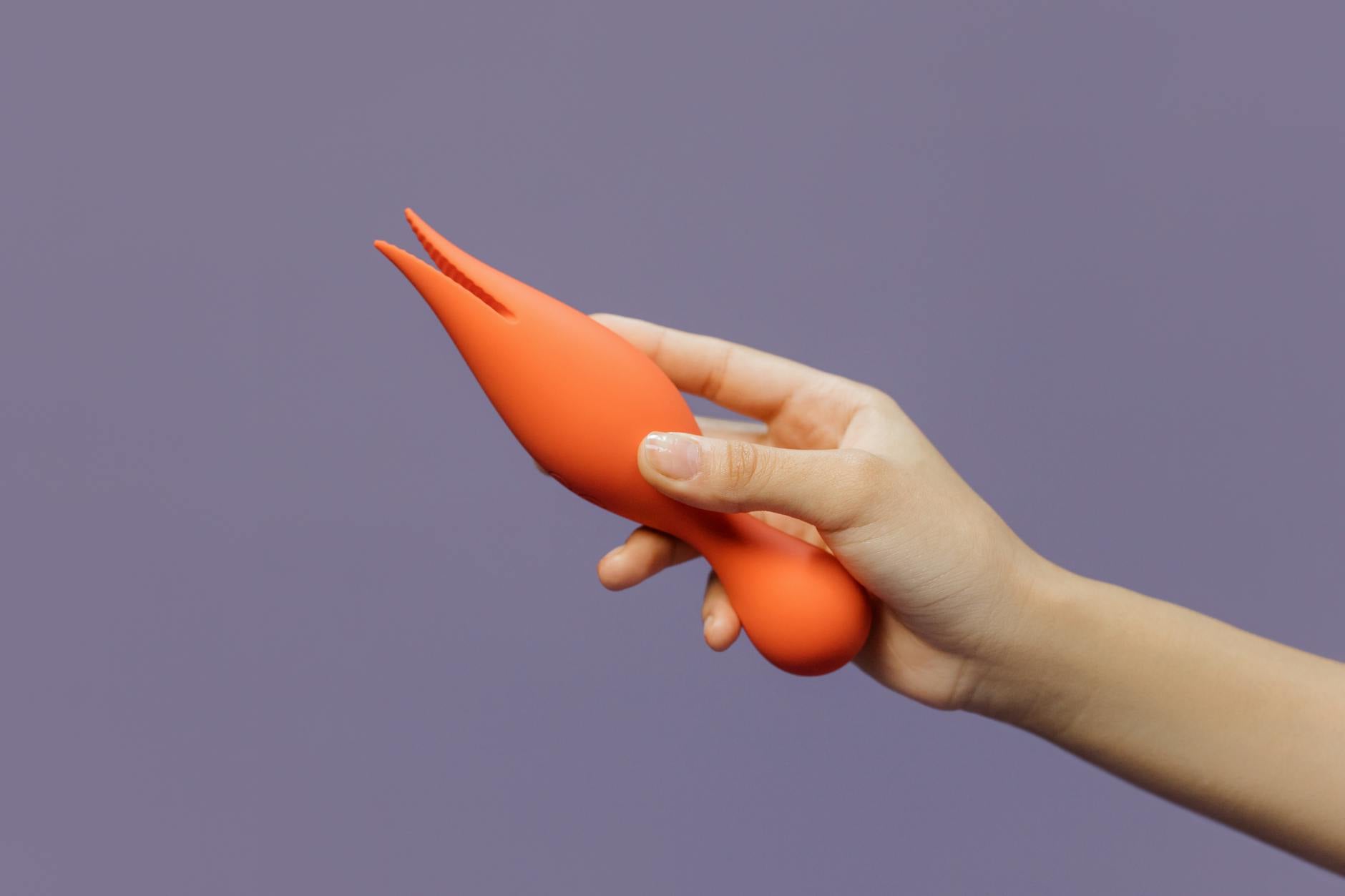
Suction technology like the Lem works differently. Instead of rubbing, it creates a gentle seal and rhythmic pulse of pressure and release. This stimulates the entire clitoral structure, not just the surface. For tissue that's become less responsive to friction, this pattern often feels more intuitive and creates sensation that builds more naturally.
Tissue composition. Collagen decreases, making tissue thinner but also sometimes more sensitive to certain types of touch. Direct pressure can feel sharper; broader, gentler suction often feels better.
Blood flow timing. Arousal takes longer partly because blood flow to the clitoral area builds more gradually. This is why warm-up time matters more than it did at 25.
Nerve signal speed. The clitoris still sends pleasure signals at the same speed, but the brain's processing of those signals changes slightly with age. This is why sustained, rhythmic patterns (like the ones the Lem creates) often feel more pleasurable than rapid, choppy vibration.
None of this is reversible, nor should it be. Your body at 45 is designed to respond to different stimulation than it did at 25. That's not loss. That's adaptation.
Start with pattern one. The Lem has multiple settings. Begin at the gentlest. This isn't because you're fragile. It's because your nervous system can now feel more nuance at lower intensities. What felt boring at 25 might feel perfect now.
Let arousal build before using it. Spend 10-15 minutes on other kinds of touch: kissing, manual stimulation, whatever turns you on. Let blood flow accumulate naturally. Then introduce the Lem. This matches how your body's arousal system now works.
Use it in a pattern, not constantly. The most common mistake is holding the Lem in one spot on one setting for too long. Instead, use it for 30-45 seconds, pull away, let sensation breathe, then come back. This mimics the natural pulse of arousal and prevents the nervous system from adapting (which is why sensation suddenly feels like nothing if you just leave it there).
Pair it with mental focus. This is less about "staying present" (that's the wellness version) and more about practical neurology. As you age, the brain's role in pleasure becomes more important relative to pure physical stimulation. If you're distracted, your brain doesn't register the signals as strongly. This is why solo exploration often feels more intense than partnered sex at this stage. There's nothing wrong with that.
Medications matter. SSRIs, blood pressure meds, and some antihistamines genuinely affect clitoral response speed. This isn't your body breaking. It's a side effect worth discussing with your doctor.
Pelvic floor tension gets worse with stress and age. A tense pelvic floor restricts blood flow, which makes everything feel duller. Kegel exercises help, but so does their opposite: learning to relax the pelvic floor fully. How to Use a Lemon Vibrator During Pelvic Floor Dysfunction covers this in depth.
Relationship dynamics shift, and that affects sensation. This is where I see the most confusion. People blame their body for reduced pleasure when the real issue is disconnection from their partner or changed desire patterns. Different problem. Different solution.
I work with couples where one or both partners report that sex actually got better after age 45. This isn't rare. Here's why.
Your 20s and 30s are often about proving something. About performance. About meeting someone else's speed or style. By your 50s, that pressure usually lifts. You know what you like. You're less afraid to ask for it. Your nervous system has stopped trying to be "on" for external validation.
When you pair that psychological shift with the physical reality of changed sensitivity, something interesting happens: you finally discover what actually feels good for your body, not what you thought was supposed to feel good.
A lemon vibrator works especially well in this stage because it's slow enough to feel intentional, varied enough to keep your nervous system engaged, and effective enough to deliver consistent pleasure without forcing anything.
Not at all. Easier and faster aren't the same as better. Most people report that orgasms after 45 are more intense and longer-lasting than they were at 25, even if they take a few minutes longer to build. The Lem shortens that build time significantly because suction matches the way your nervous system now responds to stimulation. Many of my clients say their first orgasm with the Lem at 50 felt better than anything they'd experienced in their 30s.
Completely normal. The body isn't symmetrical, and sensitivity differences often become more pronounced with age. This is why experimenting with angle and pressure matters. The Lem's broad suction cup works well for this because you can position it slightly differently and find the exact spot where sensation is strongest. If one side consistently feels numb even with positioning adjustments, mention it to your doctor. Sometimes it's just asymmetry; sometimes it points to circulation or nerve issues worth investigating.
Not reliably. Estrogen therapy (topical or systemic) can help with tissue thickness, which indirectly improves sensation. Testosterone therapy is worth discussing with a menopause-informed doctor if desire has disappeared along with sensitivity. But no supplement magically reverses age-related changes. What works better is using a toy designed for how your body actually works now. That's the Lem's whole point.
Yes. A therapist who specializes in aging and sexuality can help separate the physical from the psychological. Sometimes reduced sensation becomes a story you tell yourself ("I'm broken") which then actually affects arousal and pleasure through that anxiety loop. A good clinician can interrupt that pattern and reframe the change as adaptation, not loss. This is especially true if the sensitivity shift happened suddenly, which sometimes indicates an underlying health concern worth checking.
It depends. Manual stimulation gives you infinite control and adjustability, which is why many older people prefer it. The Lem works better if you struggle with hand stamina or if the consistent, rhythmic pulse matches your nervous system better than variable pressure does. Many people use both. Manual exploration first, then the Lem for the final phase when you know what intensity and pattern work. There's no single right answer.
No. This is a myth. Using any toy doesn't rewire your nervous system into needing that specific stimulation. What happens is you learn what sensation works for your current body and you repeat it. You're not becoming dependent. You're just being smart about using a tool that matches your physiology. People who worry about this often find that once they've had a few good orgasms with the Lem, they feel more confident exploring other kinds of touch too.
Clitoral sensitivity doesn't disappear with age. It transforms. Your body isn't broken. It's asking for a different kind of attention. The Lem is specifically designed for this shift because suction-based stimulation works with how tissue and nerves actually respond as you age, not against it. If you've felt like something was missing in your 40s or 50s, the answer often isn't harder or faster. It's smarter. It's knowing what your body actually needs and giving it that.