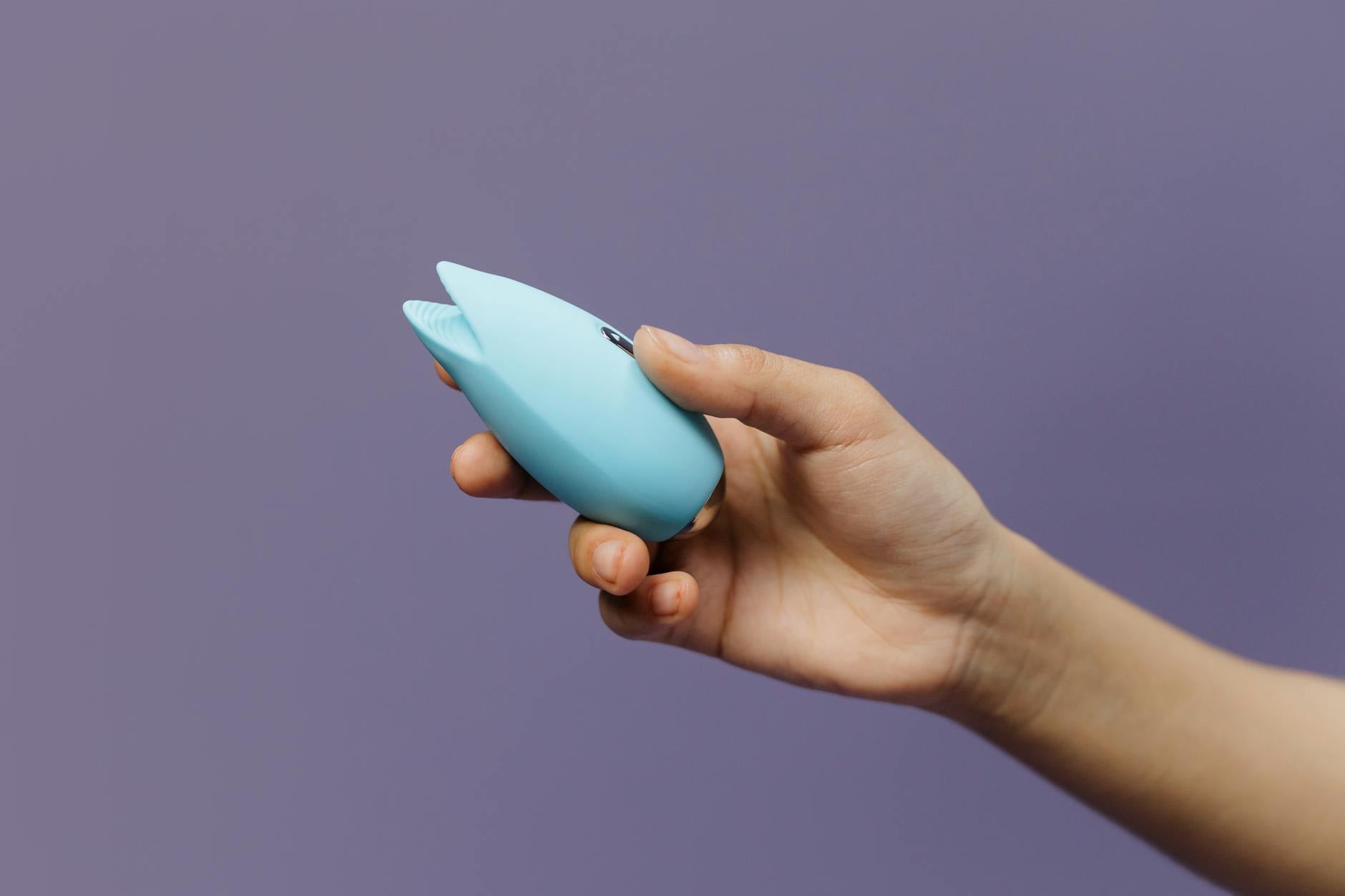
How to Use a Lemon Vibrator for Better Sensation After Hormonal Changes in Menopause
Menopause changes pleasure. It does not end it. That distinction matters because most conversations about sex during menopause fall into one of two unhelpful buckets: "everything dries up and gets worse" or "honestly, it's fine, don't worry about it." Both miss what's actually happening.
Here's what I see in my clinical work: hormonal shifts change tissue thickness, lubrication speed, and how quickly your nervous system registers stimulation. Your clitoral nerve density doesn't change. Your brain's capacity for pleasure doesn't change. What changes is the mechanism, not the potential. And once you understand the mechanism, a tool like a lemon clitoral vibrator becomes wildly more effective than it might have been before menopause.
What estrogen does (and doesn't) to pleasure
Estrogen is the tissue architect. It keeps vaginal and clitoral tissue thick, well-vascularized, and responsive. During menopause, estrogen drops by roughly 90 percent. That means tissue thins, blood flow decreases, and lubrication takes longer to arrive.
But here's what doesn't happen: your clitoris doesn't shrink. The clitoral nerve bundle doesn't lose sensitivity. The pathways in your brain that process pleasure remain intact. Many of my clients report that their most intense orgasms of their entire lives arrived after menopause. This is not a polite fiction. It's a common clinical observation, and it happens for three reasons.
First, cognitive load drops. For decades, many people have been managing fertility concerns, hormonal mood swings, and the invisible labor of "being desirable." Post-menopause, that mental load lifts. More mental space equals more capacity for sensation.
Second, there's permission. Cultural expectations soften. If you've spent years calibrating your pleasure around a partner's timeline or comfort, menopause often brings the freedom to explore your own rhythm first.
Third, better tools help. A lemon vibrator's suction mechanism works particularly well for menopausal bodies because it doesn't rely on the direct friction that can feel too intense on thinner, more sensitive tissue.
Why tissue changes require a different approach
When estrogen drops, clitoral tissue becomes thinner and more delicate. The skin around the vulva loses elasticity. The pelvic floor loses some of its muscular support. None of this is damage. It's just the architecture shifting.
Direct vibration on thinner tissue can feel sharp or overstimulating. Suction-based stimulation like a lemon clitoral vibrator works differently. Instead of oscillating directly against tissue, suction creates a gentle pull that stimulates the clitoral network without the same intensity or friction.
This is why many people find they need to start at lower intensity settings on a lemon vibrator during menopause. Patterns 1 through 3 are usually the right starting zone, even if you previously preferred higher speeds.
How arousal timing changes and why it matters
Arousal doesn't disappear during menopause. It shifts. Many people report that arousal takes 15 to 25 minutes to build instead of the 5 to 10 minutes it might have taken before. This isn't slower because something's broken. It's slower because blood flow to genital tissue moves more deliberately without the same estrogen-driven vascularization.
This matters because if you approach solo pleasure or partner sex with the same timeline as you always have, you'll likely feel frustrated. You'll interpret slow arousal as no arousal, and that's where the myth that menopause kills desire gets its foothold.
Instead, budget the time. Set aside 20 to 30 minutes. Use the first 10 to 15 minutes for mental warm-up. Read something that appeals to you. Think through fantasy. Let your nervous system settle. Then introduce your lemon vibrator. You're not rushing the process. You're honoring the new timeline.
Lubricant matters more during this phase too. Not because you're broken, but because external lubrication helps bridge the gap while internal lubrication is building. Water-based lube works best with silicone toys and doesn't interfere with the suction mechanism of a lemon clitoral vibrator.
The pelvic floor changes you should know about
Estrogen supports pelvic floor muscle tone. As estrogen drops, the pelvic floor naturally loses some of that support. Many people experience what feels like weakness or lack of control. Others experience the opposite: tightness and tension because they've unconsciously gripped the pelvic floor as a protective response.
Here's what's useful: gentle pelvic floor work during menopause is about balance, not strength. You want both the capacity to engage and the capacity to release. A lemon vibrator can actually help with this. As you use it, focus on consciously relaxing your pelvic floor instead of tensing it. This teaches your nervous system that pleasure is safe, and that release is possible.
If you notice pain during stimulation, or if orgasms feel absent or shallow, a pelvic floor specialist can assess whether there's actual dysfunction or just a mismatch between your expectations and your new normal. Many menopausal people find that 4 to 6 sessions of pelvic floor physical therapy completely transforms sensation.
When sensation feels numb or absent: what's actually happening
Some people report that during menopause, stimulation that always worked suddenly feels like nothing. This is often described as numbness, but it's usually reduced blood flow and temporarily altered nerve responsiveness. It's frustrating, and it's also very treatable.
A lemon vibrator's suction pattern can actually reawaken sensation in this context because it works with a different mechanism than direct vibration. The gentle pull-and-release rhythm of suction sometimes activates nerve fibers that direct vibration misses.
If numbness persists despite changing your approach, talk to your gynecologist about topical estrogen cream or testosterone therapy. Both are available, both are safe, and both can restore sensation within 4 to 8 weeks. A genitourinary syndrome of menopause (GSM) diagnosis is common and highly manageable.
Practical adjustments for menopausal pleasure with a lemon vibrator
Here's what I actually recommend to clients navigating this transition:
Start with pattern 1 or 2, even if you previously enjoyed higher intensities. Your tissue is different now, and intensity can feel sharp rather than pleasurable. You can always increase later. Begin with longer warm-up time. Fifteen minutes of mental engagement before any physical stimulation changes everything.
Use water-based lubricant every time. This isn't a sign of failure. It's a practical bridge while your body adjusts. Apply it generously. Slickness helps the suction mechanism work smoothly.
Experiment with angle. During menopause, slight changes in how you position a lemon vibrator against your clitoris can dramatically shift sensation. Some people find they prefer a slight angle rather than direct pressure.
Notice orgasm texture. Orgasms during menopause sometimes feel different: shorter, more localized, less full-body. This is normal. Shorter doesn't mean less intense. You're experiencing pleasure in a different way, not less pleasure.
The emotional layer that often gets missed
Menopause is rarely just about menopause. It often arrives tangled with relationship shifts, aging fears, body image changes, or grief about the end of reproductive years. These feelings absolutely affect pleasure.
When a lemon vibrator doesn't feel as good as it once did, the first instinct is to assume it's hormonal. Sometimes it is. Often it's something else wearing a hormonal disguise. If you're feeling disconnected from pleasure generally, that's worth exploring separately from the mechanical adjustments.
If you have a partner, the most useful conversation is about the mechanics of the transition, not about your desirability. "My body is responding differently and I need a different approach" is a different conversation than "I'm worried we'll lose intimacy." Don't let them become the same thing.
When to reach out for professional support
If pain appears during stimulation, don't wait. Genitourinary syndrome of menopause is real and highly treatable. A gynecologist can prescribe topical estrogen that works within weeks.
If arousal has completely disappeared and isn't returning after adjustments, testosterone therapy is worth discussing. It's prescribed more conservatively in the US than in other countries, but it's available and often life-changing.
If you feel emotionally disconnected from pleasure, a therapist who specializes in midlife transitions can help you untangle what's hormonal from what's relational or emotional.
FAQ: Your questions about lemon vibrators and menopause
Can a lemon clitoral vibrator work if I have reduced sensation from menopause?
Yes. Because suction stimulation activates different nerve pathways than direct vibration, many people with reduced sensation find that a lemon vibrator reawakens feeling that direct vibrators miss. Start at lower intensities and allow longer arousal time. If sensation doesn't improve in 4 weeks, ask your gynecologist about topical estrogen cream.
Should I use more lube with a lemon vibrator during menopause?
Almost always yes. Water-based lubricant helps the suction mechanism work smoothly and provides external lubrication while your body is producing less internally. Use generously and reapply as needed. It's not a sign of failure. It's a practical tool.
How long should arousal take when I'm using a lemon vibrator during menopause?
Budget 20 to 30 minutes total, with 10 to 15 minutes of mental warm-up before you introduce the vibrator. This is not slower in a bad way. It's just different. Many people find that the longer, deeper arousal available during menopause leads to more satisfying orgasms.
Can menopause affect how intense orgasms feel with a lemon vibrator?
Yes. Orgasms during menopause sometimes feel shorter, more localized, or less full-body than before. This is normal anatomy, not reduced pleasure. Some people actually report that they feel more intensely in the moment because they're not managing as many external distractions or pressure.
Is it normal to need a break after using a lemon vibrator during menopause?
Completely normal. With reduced estrogen, tissues can feel more sensitive post-stimulation. This passes within minutes to hours. If soreness persists or feels painful, reduce intensity or frequency and mention it to your gynecologist.
Will a lemon vibrator feel as good during menopause as it did before?
Different, not worse. Some people find they prefer menopausal pleasure because there's less pressure and more permission. Others need an adjustment period. Both are valid. Give yourself at least 4 to 6 weeks of experimentation before deciding if your approach needs to change.
The truth about pleasure after menopause
Menopause is not the end of your sexual life. It's the middle chapter, and in many ways, it's the most interesting one. Your body has changed. The mechanism is different. But the capacity for deep, satisfying pleasure is absolutely still there. A lemon clitoral vibrator, used with understanding of what's actually happening in your body, becomes a tool that meets you where you are now, not where you were before.
The best time to explore this transition is with patience, good information, and tools that work with your body's current biology. If you're ready to adjust your approach and give yourself permission to pleasure on your own timeline, that's when everything shifts.
Have questions about how to use a lemon vibrator during this transition? Reach out. I'm here to help you navigate this chapter with confidence and good sense.